The Broadband Betrayal: How Rural and Low-Income Americans Were Promised Internet Access — Then Watched Billions Vanish Into Corporate Pockets
The Great Connectivity Con
In 2021, Congress allocated $42 billion through the Broadband Equity, Access, and Deployment (BEAD) program to finally solve America's digital divide. Three years later, that money has largely disappeared into the quarterly earnings of telecommunications giants while millions of Americans remain trapped on the wrong side of the digital divide. Rural communities promised fiber-optic salvation are still relying on satellite internet that cuts out during storms. Low-income urban neighborhoods are still choosing between groceries and internet bills. The broadband expansion that was supposed to democratize opportunity has instead become another mechanism for corporate wealth extraction.
When Public Investment Meets Private Profit
From a progressive standpoint, the broadband betrayal represents everything wrong with America's approach to essential infrastructure. Internet access in 2024 is not a luxury — it's a prerequisite for economic participation, educational advancement, healthcare access, and civic engagement. Yet instead of treating broadband as a public utility that should be universally accessible, policymakers have handed billions in taxpayer money to private corporations with minimal oversight and accountability.
The result is predictable: telecom companies have gamed the system to maximize profits while minimizing actual service expansion. They've lobbied successfully to define "coverage" in ways that allow them to claim communities are "served" when residents still lack reliable, affordable internet access. They've focused expansion efforts on profitable suburban markets while continuing to neglect the rural and low-income communities that federal funding was specifically designed to reach.
This isn't market failure — it's market design. When essential infrastructure is treated as a profit center rather than a public good, the predictable result is that communities with the greatest need receive the least service.
The Coverage Shell Game
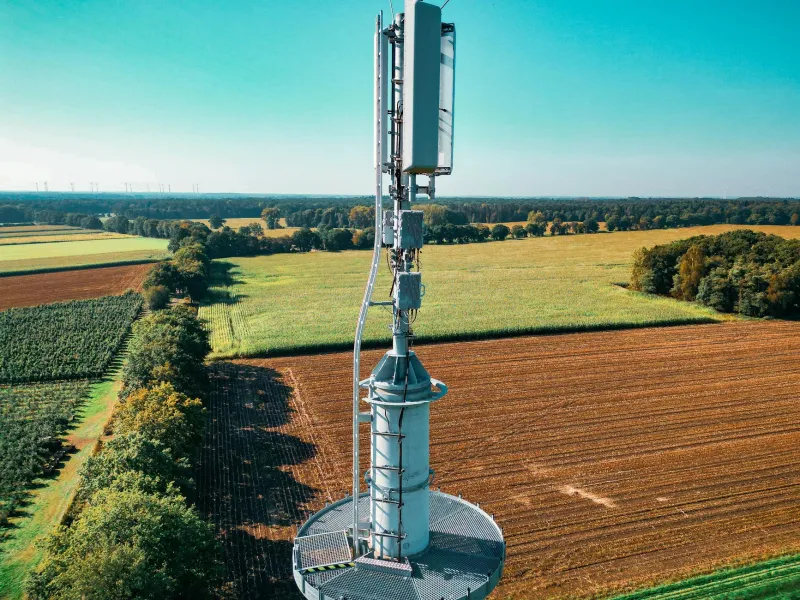
The most insidious aspect of the broadband betrayal lies in how "coverage" is defined and measured. Telecommunications companies have successfully lobbied for definitions that allow them to claim vast areas as "served" based on theoretical coverage maps rather than actual service delivery. If a cell tower can theoretically provide service to an area, that area counts as covered — regardless of whether residents can actually access reliable internet.
Federal data shows that over 19 million Americans lack access to broadband internet, but this dramatically understates the problem. The Federal Communications Commission's coverage maps, which determine funding allocation, are based on census blocks. If a single address in a census block has broadband access, the entire block — potentially covering hundreds of square miles in rural areas — is marked as served.
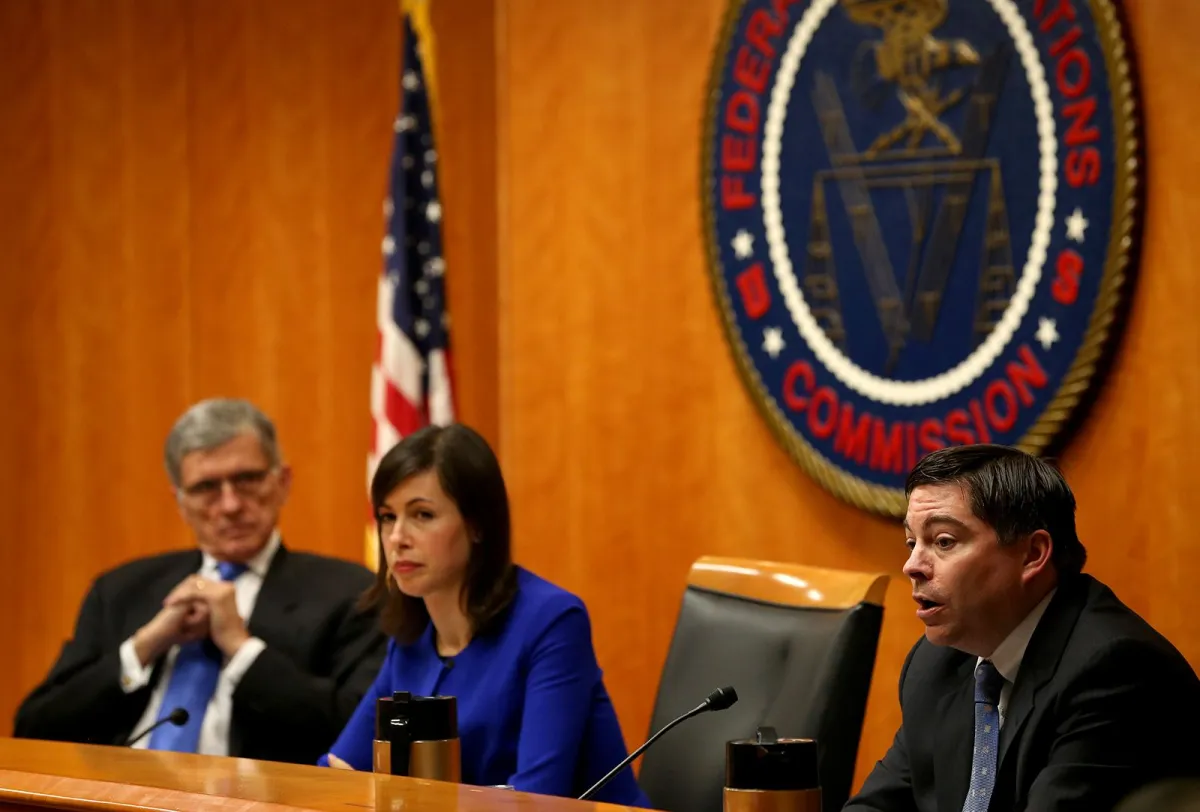 Photo: Federal Communications Commission, via cdn.britannica.com
This mapping fiction allows telecom companies to claim they're expanding coverage while leaving entire communities behind. Rural Americans report that their addresses show as "served" on federal maps while they struggle with dial-up speeds or no internet access at all. The disconnect between official coverage statistics and on-the-ground reality has created a system where public money flows to corporations while public need goes unmet.
The Economic Justice Dimension
Conservatives often frame broadband access as a market issue that will resolve itself through competition and technological advancement. They argue that government intervention distorts markets and that private companies are better positioned to determine where and how to expand internet infrastructure. But this market-fundamentalist approach ignores the reality that broadband access has become a determinant of economic opportunity and social mobility.
Without reliable internet access, students cannot complete homework assignments, workers cannot access remote employment opportunities, patients cannot participate in telehealth appointments, and citizens cannot engage with government services that have moved online. The digital divide has become a mechanism for entrenching existing inequalities rather than expanding opportunity.
Who Gets Left Behind
The communities still waiting for broadband expansion are not randomly distributed — they reflect America's existing patterns of marginalization and disinvestment. Rural areas, particularly those with large populations of color, receive the least investment despite paying the highest prices for internet service. Tribal lands have some of the lowest connectivity rates in the nation, with some reservations reporting internet access rates below 50 percent.
In urban areas, the digital divide follows income lines with stark precision. Low-income neighborhoods are more likely to rely on mobile data plans with restrictive caps, making it impossible to participate fully in an economy that assumes unlimited high-speed internet access. Students in these communities fall behind academically, workers miss employment opportunities, and families struggle to access healthcare and government services.
The COVID-19 pandemic made these disparities impossible to ignore, as remote work and remote learning became necessities rather than conveniences. Students without broadband access fell months behind their connected peers. Workers without reliable internet lost employment opportunities. The digital divide revealed itself as a fundamental barrier to economic survival.
The Telehealth Emergency
Perhaps nowhere is the broadband betrayal more consequential than in healthcare access. Telehealth has become essential for medical care, particularly in rural areas where hospitals have closed and specialist care requires hours of travel. Yet the communities most dependent on telehealth are often those least likely to have the broadband infrastructure necessary to support it.
Rural Americans are more likely to suffer from chronic conditions that require regular medical monitoring, yet they're also more likely to lack the internet access necessary for remote patient monitoring and telehealth consultations. The result is a healthcare access crisis that broadband expansion was supposed to solve but has instead exacerbated through years of false promises and corporate giveaways.
The Democratic Participation Gap
Beyond economic and health impacts, the broadband divide represents a fundamental threat to democratic participation. As government services move online and civic engagement increasingly happens through digital platforms, lack of internet access becomes a barrier to full citizenship. Voters without reliable broadband struggle to research candidates and issues, access voting information, and participate in the digital public square where much political discourse now occurs.
This digital disenfranchisement is particularly acute in rural communities that have historically been underrepresented in political decision-making. The broadband betrayal compounds their marginalization by making it even harder to organize politically and advocate for their interests.
Reclaiming Public Investment
The solution to the broadband betrayal requires treating internet access as what it actually is: essential infrastructure that should be publicly owned and universally accessible. This means municipal broadband networks, public-private partnerships with strong accountability mechanisms, and federal funding that flows directly to communities rather than through corporate intermediaries.
Several cities and rural cooperatives have demonstrated that public broadband networks can deliver faster, more reliable, and more affordable internet service than private alternatives. These community-owned networks prioritize universal access over profit maximization, resulting in better outcomes for residents and businesses.
The $42 billion in federal broadband funding represents a massive public investment that should generate public benefits. Instead of allowing telecommunications corporations to pocket taxpayer money while leaving communities behind, policymakers should demand accountability, transparency, and results.
America's digital divide is not a technical problem waiting for a market solution — it's a policy choice that prioritizes corporate profits over public need, and it's a choice that can be reversed.