The Civics Blackout: How America Stopped Teaching Democracy — and Started Reaping the Consequences
The Crisis in Numbers
Only 27% of Americans can name their two U.S. senators. Fewer than half can identify which party controls their state legislature. When asked to explain how a bill becomes law, most high school seniors score worse than random chance would predict. These aren't just embarrassing statistics—they're the predictable outcome of a decades-long assault on civic education that has left American democracy structurally vulnerable.
Since the passage of No Child Left Behind in 2001, schools have systematically gutted civics and social studies programs to make room for more math and reading test prep. What was once a cornerstone of public education—teaching young Americans how their government works and how to participate in it—has been relegated to an afterthought, if it's taught at all.
The Policy Architecture of Ignorance
This didn't happen by accident. The defunding of civic education follows a clear pattern: as standardized testing consumed more classroom time and budget resources, civics was among the first subjects sacrificed. Between 2001 and 2012, instructional time for social studies dropped by 36% in elementary schools nationwide, according to the Center on Education Policy.
Meanwhile, vocational tracking programs—often marketed as "career readiness"—have increasingly steered working-class students away from the critical thinking skills that robust civic education provides. The message is clear: some Americans are meant to govern, others are meant to work and stay quiet.
The consequences extend beyond individual ignorance. A 2020 study by the Annenberg Public Policy Center found that Americans who lack basic civic knowledge are significantly more likely to believe conspiracy theories and fall victim to political disinformation. They're also less likely to vote, volunteer, or engage in community organizing—the building blocks of democratic participation.
The Conservative Case Falls Apart
Defenders of current education policy argue that schools should focus on "practical skills" rather than "abstract political concepts." This framing deliberately misunderstands what civic education actually entails. Learning how local government works isn't abstract—it's the most practical knowledge a citizen can have when their water is contaminated, their rent is unaffordable, or their polling place gets moved.
The "practical skills" argument also ignores the economic benefits of civic engagement. Communities with higher levels of civic participation consistently show better economic outcomes, lower crime rates, and more effective public services. Democracy isn't a luxury good—it's infrastructure.
Who Pays the Price
The civic knowledge gap disproportionately harms the communities that most need effective government: low-income families, communities of color, and rural areas. When residents don't know how to navigate city council meetings, file public records requests, or understand ballot initiatives, they can't advocate for the resources and protections they need.
This creates a vicious cycle. Wealthy, well-educated communities maintain robust civic engagement because they can afford private tutoring and test prep that includes civic knowledge. Working-class communities, relegated to schools focused solely on standardized test scores, produce graduates who lack the tools to challenge the very inequalities that constrained their education.
The result is a democracy where participation becomes increasingly correlated with class privilege—exactly the opposite of what public education was designed to achieve.
Beyond the Classroom
The solution requires more than adding civics back to the curriculum. Effective civic education must be experiential: students need opportunities to engage with real local issues, attend government meetings, and practice democratic participation. This means funding field trips, guest speakers, and community partnerships—all of which require resources that cash-strapped schools currently lack.
States like Illinois and Rhode Island have begun mandating civic education requirements, but without corresponding funding increases, these mandates often become unfunded mandates that force schools to choose between compliance and other educational priorities.
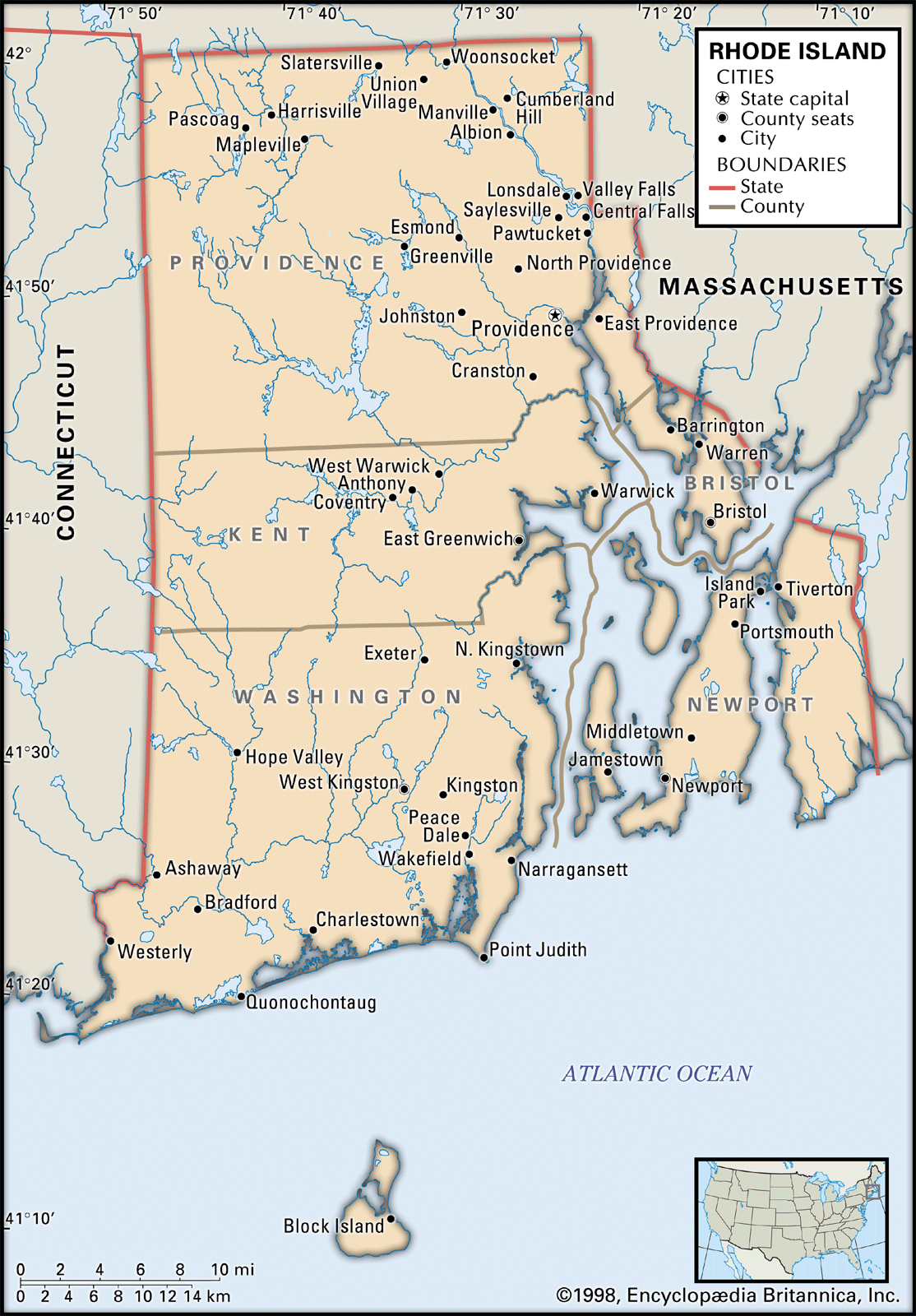 Photo: Rhode Island, via cdn.britannica.com
The Democracy We Deserve
A generation of Americans has been deliberately denied the knowledge they need to govern themselves effectively. This isn't a side effect of education reform—it's a feature of a system that benefits from public disengagement.
Restoring robust civic education means treating democracy as a skill that requires practice, not a birthright that maintains itself. It means funding schools to teach critical thinking, media literacy, and political participation as core subjects, not electives. Most importantly, it means recognizing that an informed citizenry isn't just good for democracy—it's essential for survival.
The choice is clear: we can continue producing graduates who don't know how their government works, or we can invest in the civic knowledge that makes self-governance possible.