The Great Shell Game
When Elon Musk and Vivek Ramaswamy unveiled their "Department of Government Efficiency" (DOGE) with promises to slash federal agencies, they weren't proposing to eliminate government power. They were proposing to redistribute it. The deregulation doctrine that has animated conservative politics for over four decades operates on a fundamental deception: that reducing federal oversight means reducing oversight altogether. In reality, it means handing the regulatory pen to corporate executives who answer to shareholders, not voters.
 Photo: Elon Musk, via img.freepik.com
This isn't theoretical. We've run this experiment before, and the results are written in contaminated groundwater, collapsed pension funds, and workplace injury reports that read like war casualty lists.
The Reagan Revolution's Unfinished Business
The modern deregulation movement began with Ronald Reagan's declaration that "government is not the solution to our problem; government is the problem." But Reagan's revolution was never about shrinking government — it was about redirecting its power. While slashing regulatory budgets and staff, the Reagan administration simultaneously expanded military spending and corporate subsidies. The government didn't get smaller; it just got more responsive to capital and less responsive to workers.
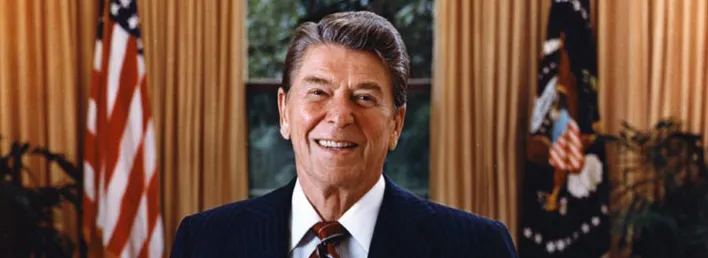 Photo: Ronald Reagan, via www.datocms-assets.com
Consider the Environmental Protection Agency, which has seen its enforcement budget slashed by 27% since 2010 when adjusted for inflation. During that same period, corporate environmental violations have surged, but companies increasingly face administrative penalties rather than criminal prosecution. The result? Corporations have effectively become their own environmental regulators, with predictable consequences for communities downstream and downwind from industrial facilities.
The Consumer Financial Protection Bureau offers an even starker example. Created after the 2008 financial crisis to prevent predatory lending, the CFPB has returned over $17 billion directly to consumers since its inception. Yet it remains under constant attack from the same financial industry it regulates, with Republicans consistently pushing to eliminate or defang the agency. The message is clear: oversight is acceptable only when it serves corporate interests.
The Human Cost of Corporate Self-Regulation
Deregulation advocates often frame their agenda in abstract terms — efficiency, innovation, market freedom. But the human costs are concrete and measurable. When the Occupational Safety and Health Administration (OSHA) lacks sufficient inspectors to visit every workplace even once per century, workplace deaths become a form of deregulated market outcome.
The numbers tell the story. OSHA employs fewer than 800 federal inspectors to oversee 130 million workers at 8 million worksites. The agency's maximum penalty for a willful violation that kills a worker is $156,259 — less than the cost of a luxury car. For many corporations, workplace safety violations have become a cost of doing business rather than a legal imperative.
The 2010 Upper Big Branch mine explosion in West Virginia, which killed 29 miners, exemplifies this dynamic. Massey Energy had accumulated over 1,300 safety violations in the months before the disaster, but the company's legal strategy of appealing every citation meant most penalties were never paid. The regulatory system designed to protect workers had been gamed into irrelevance.
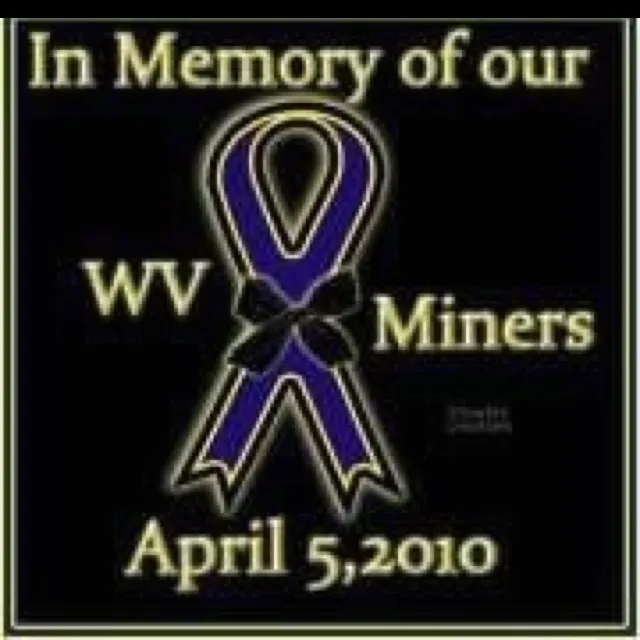 Photo: Upper Big Branch, via i.pinimg.com
The Privatization of Democracy
Perhaps the most insidious aspect of the deregulation doctrine is how it reframes democratic accountability as bureaucratic inefficiency. When federal agencies develop regulations, they must undergo public comment periods, environmental impact assessments, and congressional oversight. When corporations make decisions that affect public health and safety, they consult their legal departments and shareholders.
This shift from public to private governance has profound implications for democratic participation. Citizens can vote out politicians who support harmful policies, but they cannot vote out corporate executives who prioritize profits over public welfare. When regulatory power moves from agencies accountable to voters to boardrooms accountable to shareholders, democracy itself becomes a casualty.
The financial industry's response to post-2008 reforms illustrates this dynamic perfectly. Rather than accept stricter oversight, major banks have spent over $2 billion lobbying against financial regulations while simultaneously developing complex derivatives designed to circumvent existing rules. The result is a financial system that remains "too big to fail" while becoming even more concentrated and systemically risky.
The Innovation Myth
Deregulation proponents consistently argue that reducing oversight spurs innovation and economic growth. But this narrative collapses under scrutiny. Some of America's greatest technological achievements — the internet, GPS, touchscreen technology — emerged from government research programs, not deregulated markets.
Moreover, the type of "innovation" that flourishes in deregulated environments often involves finding new ways to externalize costs onto workers and communities. The gig economy's transformation of employees into contractors isn't innovative — it's a return to pre-New Deal labor relations wrapped in smartphone apps. When Uber and Lyft classify drivers as independent contractors, they're not innovating; they're avoiding responsibility for workers' compensation, unemployment insurance, and basic labor protections.
DOGE and the Next Phase
The proposed Department of Government Efficiency represents the logical endpoint of the deregulation doctrine. By targeting agencies like the EPA, NLRB, and CFPB for elimination or severe cuts, DOGE would complete the transfer of regulatory power from democratic institutions to corporate boardrooms.
But this agenda faces a fundamental contradiction. The same voters who express frustration with government bureaucracy consistently support the specific protections these agencies provide. Polling shows that 70% of Americans want stricter environmental regulations, 65% support stronger worker protections, and 60% favor increased financial industry oversight. The deregulation doctrine succeeds politically only by obscuring the connection between abstract anti-government sentiment and concrete policy outcomes.
Reclaiming Democratic Oversight
The alternative to corporate self-regulation isn't bureaucratic bloat — it's democratic accountability. Effective regulatory agencies require adequate funding, clear mandates, and independence from the industries they oversee. This means robust budgets for enforcement, staff positions that can compete with private sector salaries, and leadership appointed based on expertise rather than industry connections.
More fundamentally, it requires recognizing that regulation isn't the enemy of freedom — it's the prerequisite for meaningful choice in a complex economy. When corporations can pollute without consequence, workers cannot choose clean air. When financial institutions can engage in predatory lending, consumers cannot choose fair credit. When employers can violate safety standards with impunity, workers cannot choose safe workplaces.
The Power Question
Ultimately, the deregulation debate is about power: who exercises it, how they're held accountable, and whose interests they serve. The choice isn't between government and freedom — it's between democratic oversight and corporate autocracy. Every regulatory rollback represents a conscious decision to prioritize capital accumulation over human welfare, shareholder returns over worker safety, and private profit over public good.
As we face mounting challenges from climate change to economic inequality to workplace exploitation, the question isn't whether we need oversight — it's whether that oversight will serve democracy or plutocracy. The deregulation doctrine offers a clear answer: it consistently chooses corporate boardrooms over voting booths, and working Americans always pay the price.