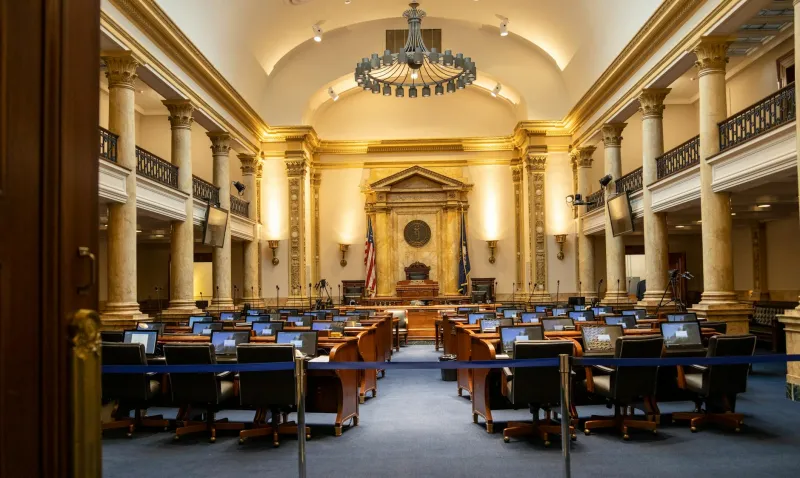
Since 2010, the United States House of Representatives has passed 427 bills addressing climate change, voting rights, gun violence, healthcare access, and economic inequality that never received a floor vote in the Senate due to filibuster threats. These weren't fringe proposals—they included legislation supported by 60-70% of American voters, representing the democratic will of the majority systematically thwarted by procedural obstruction designed to protect minority rule.
The Mathematics of Minority Rule
The numbers reveal the scope of democratic dysfunction. The For the People Act, which would have established nationwide early voting, automatic registration, and redistricting reform, passed the House with bipartisan support in 2019 and 2021 but died without a Senate vote. The John Lewis Voting Rights Advancement Act, restoring federal oversight of voting changes in states with histories of discrimination, met the same fate. The Equality Act, prohibiting LGBTQ+ discrimination in employment and housing, passed the House three times since 2019—and three times disappeared into the Senate's procedural void.
Climate legislation tells an even starker story. The Clean Economy Jobs and Innovation Act, the CLEAN Future Act, and dozens of smaller environmental bills passed the House only to vanish in the Senate. Meanwhile, global temperatures continue rising and extreme weather events multiply, but the world's largest historical carbon emitter remains paralyzed by procedural rules that treat legislative obstruction as sacred tradition.
The Weapon's True History
The filibuster's defenders invoke tradition and deliberation, but the historical record reveals different origins. The procedure emerged not from constitutional design but from an 1806 rule change that Aaron Burr suggested to eliminate "redundant" procedures. For the next century, it remained rarely used.
The filibuster's transformation into a weapon of obstruction coincided directly with civil rights advancement. Strom Thurmond's 24-hour filibuster against the Civil Rights Act of 1957 established the template that southern senators would perfect over the following decades. They used extended debate not to improve legislation but to kill it entirely, turning the Senate floor into a graveyard for racial equality.
This pattern persists today with different targets but identical tactics. The same procedural weapon once wielded to preserve segregation now blocks voting rights restoration, climate action, and economic justice. The continuity isn't coincidental—it reflects the filibuster's core function as a tool for preserving existing power structures against democratic pressure for change.
The Human Cost of Procedural Paralysis
Behind every filibustered bill lie real consequences for real people. The Paycheck Fairness Act, blocked repeatedly since 2010, would have strengthened equal pay enforcement—leaving the gender wage gap to persist while senators debate "tradition." The Raise the Wage Act, filibustered in 2021, would have lifted millions of workers out of poverty, but minimum wage remains frozen at $7.25 per hour.
Healthcare legislation presents perhaps the starkest example. Multiple bills expanding Medicare coverage, reducing prescription drug costs, and strengthening the Affordable Care Act passed the House only to die in Senate procedure. Meanwhile, Americans ration insulin, skip cancer treatments, and declare bankruptcy over medical bills that other developed nations have eliminated through the kind of systematic reform the filibuster prevents.
International Comparison Exposes American Exceptionalism
No other major democracy tolerates this level of procedural obstruction. The British House of Lords can delay legislation but cannot kill it indefinitely. The German Bundesrat represents state interests but cannot block federal legislation through unlimited debate. The Canadian Senate rarely opposes House-passed bills and has no equivalent to the filibuster.
These systems recognize that democracy requires majority rule with minority rights, not minority rule with majority frustration. The United States stands alone in treating legislative paralysis as constitutional virtue rather than democratic pathology.
The Electoral College Connection
The filibuster's anti-majoritarian effects compound with other undemocratic institutions. Senators representing just 11% of the American population can block legislation supported by the other 89%. This isn't theoretical—it describes the actual voting patterns on climate legislation, voting rights, and economic reform over the past decade.
When combined with the Electoral College and gerrymandered House districts, the filibuster creates a system where political minorities can exercise governing power despite losing elections. This isn't stability—it's institutionalized minority rule that breeds the kind of political frustration and extremism that threatens democratic legitimacy itself.
Reform Requires Recognizing Reality
Filibuster reform doesn't require constitutional amendment or revolutionary change. The Senate has modified its rules dozens of times throughout history, most recently eliminating the filibuster for judicial nominations. The procedure exists at the pleasure of Senate majorities, not constitutional mandate.
The question isn't whether reform is possible but whether senators will choose democratic governance over procedural tradition. Every day the filibuster survives represents a choice to prioritize minority obstruction over majority will, legislative paralysis over democratic responsiveness.
Democracy Cannot Function Without Majority Rule
The filibuster's defenders argue that unlimited debate promotes compromise and deliberation, but the evidence contradicts this theory. Modern filibusters involve no debate—just procedural threats that kill legislation before discussion begins. They promote not compromise but capitulation, not deliberation but obstruction.
American democracy faces existential challenges that require systematic responses: climate change that threatens civilization itself, voting restrictions that undermine electoral integrity, economic inequality that destabilizes social cohesion. The filibuster ensures that these challenges will persist while senators invoke "tradition" to justify inaction. Progress requires choosing democracy over procedure, majority rule over minority obstruction, and legislative action over institutional paralysis.