The Economy That Runs on Love—And Exploitation
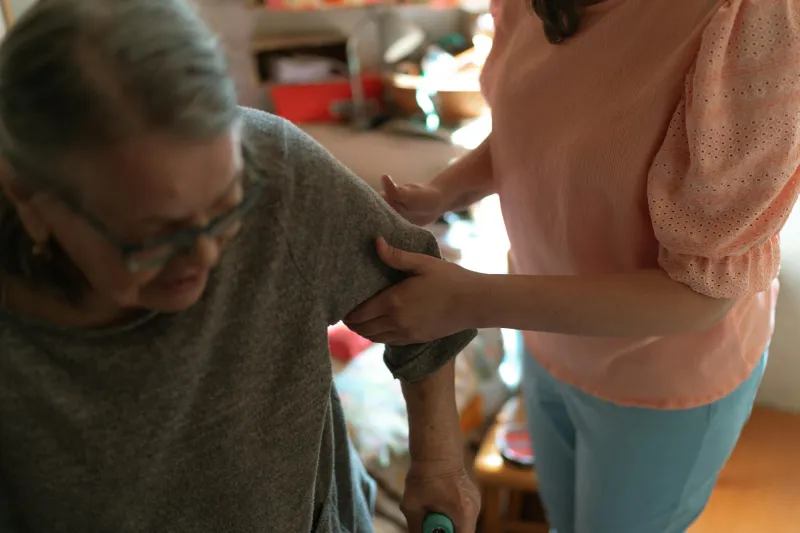
Every morning, millions of Americans go to work because someone else—usually a woman, often a woman of color—is caring for their children, their aging parents, or their disabled family members. These care workers form the invisible backbone of the American economy, enabling everyone else's productivity while earning wages that keep them trapped in poverty.
The numbers tell a stark story: the care economy generates over $600 billion annually, yet the median wage for childcare workers is just $13.22 per hour—less than retail workers or parking lot attendants. Home health aides, who provide intimate personal care for society's most vulnerable, earn a median wage of $14.15 per hour. Nearly 40 percent of care workers rely on public assistance to survive, meaning taxpayers subsidize the low wages that allow families and businesses to access affordable care.
This isn't market failure—it's market design. America has built an entire economic sector on the assumption that care work isn't "real" work, that the skills required to nurture, heal, and support human beings are somehow less valuable than those needed to flip burgers or stock shelves.
The Gendered Geography of Devaluation
The devaluation of care work is inseparable from who performs it. Roughly 90 percent of childcare workers are women, and nearly half are women of color. In home health care, the workforce is 87 percent female and disproportionately composed of immigrants and women of color. This isn't coincidence—it's the continuation of a historical pattern that has consistently undervalued work associated with women, particularly women of color.
For decades, care work was explicitly excluded from labor protections. The Fair Labor Standards Act of 1938 exempted domestic workers from minimum wage and overtime protections—a deliberate choice rooted in the racial politics of the New Deal era, when Southern Democrats demanded the exclusion of occupations dominated by Black women. While some of these exclusions have been rolled back, their legacy persists in the form of weak enforcement, limited benefits, and cultural assumptions about whose labor deserves protection.
The result is a workforce that provides essential services while living on the economic margins. A 2021 study found that 46 percent of home care workers experienced food insecurity in the past year, compared to 10 percent of the general population. Many work multiple jobs, lack health insurance, and have no paid sick leave—meaning they often work while ill, potentially exposing vulnerable clients to illness.
The False Economy of Cheap Care
Business groups and conservative economists often argue that higher wages for care workers would make care unaffordable for working families, pricing out the very people these services are meant to help. They frame low wages as a necessary trade-off for accessibility—a form of market-based compassion.
This argument ignores both the hidden costs of the current system and the false choice it presents. When care workers earn poverty wages, the broader economy pays through increased reliance on public assistance, higher turnover and training costs, and reduced quality of care. High turnover in childcare centers—often exceeding 40 percent annually—creates instability that harms child development. In home health care, rapid turnover means elderly and disabled clients constantly adjust to new caregivers, disrupting routines that are crucial for their wellbeing.
Moreover, the "affordability" argument reveals a fundamental misunderstanding of care as a public good rather than a private commodity. Countries like Denmark and Sweden demonstrate that universal childcare and eldercare—funded through progressive taxation rather than individual family budgets—can provide high-quality care while ensuring decent wages for workers.
The Infrastructure We Refuse to See
Care work is infrastructure—as essential to economic functioning as roads, bridges, or broadband networks. When childcare centers close due to staff shortages, parents can't work. When home health aides quit because of poverty wages, families face impossible choices between caring for aging parents and maintaining their careers.
The COVID-19 pandemic made this infrastructure visible in ways that decades of advocacy couldn't. When schools and childcare centers closed, millions of workers—particularly women—were forced out of the workforce. The economy didn't just slow down; it ground to a halt in ways that revealed how dependent American productivity is on the invisible labor of care.
Yet even this revelation hasn't translated into systemic change. While Congress debated infrastructure packages worth trillions of dollars, investments in care infrastructure remained marginal, treated as social spending rather than economic necessity.
The Organizing Revolution
Despite facing enormous structural obstacles, care workers are organizing with increasing sophistication and success. The Fight for $15 movement has expanded beyond fast food to include home care workers demanding living wages and union recognition. In cities like Seattle and San Francisco, domestic workers have won bills of rights that establish basic protections and grievance procedures.
These victories matter not just for the workers involved, but for the broader labor movement's evolution. Care work organizing challenges traditional union models built around male-dominated industrial workplaces, developing new strategies for workers scattered across private homes and small facilities. The innovations emerging from care work organizing—including portable benefits, sectoral bargaining, and community-labor coalitions—may prove crucial for organizing the broader service economy.
The Choice America Faces
The care crisis is accelerating. America's population is aging rapidly, with the number of people over 65 expected to nearly double by 2050. Simultaneously, more families need childcare as women's workforce participation becomes economic necessity rather than choice. Without dramatic changes to how we structure and fund care work, the current crisis will become a catastrophe.
We can continue the current path: treating care as a private responsibility and care workers as expendable, accepting the human costs of a system built on exploitation. Or we can recognize care work for what it is—essential labor that deserves protection, dignity, and decent compensation.
This choice will define not just the care economy, but the kind of society America becomes. A country that refuses to value the work of caring for its most vulnerable members reveals its true priorities—and they aren't pretty.