The Invisible Tax: How America's Crumbling Infrastructure Costs Working Families Thousands Every Year
Every morning, Maria Santos navigates the same pothole-riddled stretch of Highway 183 in Austin, Texas, watching her odometer climb as her 2015 Honda Civic absorbs punishment that costs her nearly $600 annually in repairs. She's not alone. According to the American Society of Civil Engineers' 2021 Infrastructure Report Card, the average American household pays $3,300 per year due to deteriorating infrastructure—a regressive tax that disproportionately burdens working families who can least afford it.
The Hidden Costs of Governmental Neglect
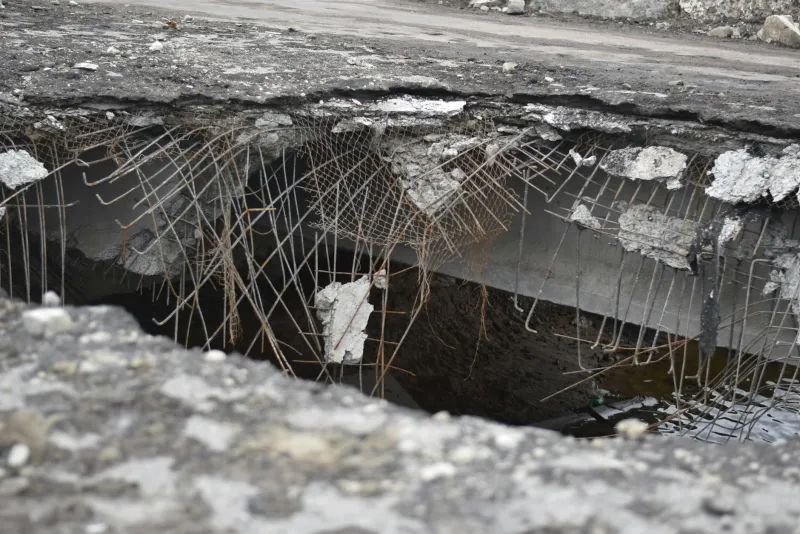
This isn't just about inconvenience. When Congress fails to invest in public infrastructure, it doesn't eliminate costs—it privatizes them, forcing individual families to absorb expenses that should be collective responsibilities. The Federal Highway Administration estimates that poor road conditions cost drivers $516 annually in vehicle repairs, but this figure masks dramatic regional disparities. In states like Louisiana and Rhode Island, where infrastructure investment has lagged for decades, drivers pay upward of $700 per year.
The burden extends far beyond automotive expenses. Aging water systems force families to purchase bottled water or expensive filtration systems. In Flint, Michigan, residents still spend an average of $200 monthly on bottled water—eight years after the crisis began. Unreliable public transit costs workers lost wages and forces them into car ownership they can't afford. The Transportation Equity Network found that households earning under $25,000 spend 42% of their income on transportation, compared to 15% for households earning over $100,000.
A System Rigged Against the Working Class
The geography of infrastructure decay reveals its class dimensions. Wealthy suburbs enjoy smooth roads maintained by higher property tax bases, while working-class neighborhoods endure cracked pavement and failing water mains. The Environmental Protection Agency estimates that 6-10 million homes still receive water through lead service lines, concentrated overwhelmingly in communities of color and low-income areas.
Consider the mathematics of inequality: a $500 annual "pothole tax" represents 2% of a $100,000 salary but 5% of a $40,000 income. For families living paycheck to paycheck, a blown tire from road debris or a plumbing emergency from aging municipal water systems can trigger cascading financial crises—missed work, overdraft fees, predatory lending.
The Conservative Mythology of "Fiscal Responsibility"
Defenders of infrastructure neglect invoke fiscal conservatism, arguing that government spending crowds out private investment and burdens taxpayers. This argument collapses under scrutiny. The American Society of Civil Engineers estimates that every $1 invested in infrastructure generates $6 in economic returns. Moreover, the Federal Reserve Bank of San Francisco found that infrastructure spending during recessions produces multiplier effects of 1.4—meaning every government dollar generates $1.40 in economic activity.
The real fiscal irresponsibility lies in deferring maintenance. The Federal Highway Administration calculates that every $1 of deferred road maintenance costs $7 in future reconstruction. By 2039, the accumulated infrastructure investment gap will reach $2.6 trillion, according to the ASCE—a burden that will inevitably fall on future taxpayers.
Rural America Bears the Heaviest Load
Infrastructure decay hits rural communities with particular severity. The USDA estimates that 39% of rural bridges are structurally deficient, compared to 24% in urban areas. Rural residents drive longer distances on worse roads, compounding vehicle maintenance costs while earning lower median incomes. In agricultural regions, crumbling rural highways increase food transportation costs, ultimately raising grocery prices for everyone.
Broadband infrastructure tells a similar story. The Federal Communications Commission reports that 28% of rural Americans lack access to high-speed internet, compared to 2% in urban areas. This digital divide costs rural families opportunities in remote work, online education, and telemedicine—particularly devastating during the COVID-19 pandemic when internet access became essential for economic survival.
The Path Forward: Public Investment as Economic Justice
President Biden's Infrastructure Investment and Jobs Act allocated $1.2 trillion over eight years—a significant start, but insufficient to address the accumulated maintenance backlog. The legislation prioritizes equity, directing 40% of benefits toward disadvantaged communities, but implementation remains uneven across states.
Progressive infrastructure policy must recognize that public investment isn't spending—it's wealth redistribution that levels the playing field. When government builds reliable transit, maintains safe roads, and ensures clean water, it reduces the private costs that burden working families disproportionately.
Beyond Repair: Reimagining Public Responsibility
The infrastructure crisis reflects deeper questions about collective responsibility versus individual burden. Do we accept a society where zip code determines access to basic services, where working families subsidize governmental neglect through higher private costs? Or do we rebuild the social contract around shared investment in shared prosperity?
The choice isn't between government spending and fiscal discipline—it's between public investment that benefits everyone and private taxation that exploits the vulnerable.
When America's infrastructure crumbles, working families pay the price twice: once through neglect, and again through the hidden costs of living in a society that abandoned its public responsibilities.