Why the American Labor Movement's Revival Is the Most Underreported Story of the Decade
While political commentators obsess over poll numbers and primary schedules, the most significant development in American politics is happening in Amazon warehouses, Starbucks stores, and university campuses across the country. Workers are organizing at rates not seen in generations, public support for unions has reached its highest level in nearly 60 years, and a new generation is embracing collective action as the antidote to decades of wage stagnation and workplace powerlessness.
Yet mainstream political coverage continues to treat labor organizing as a niche beat story, filed somewhere between agricultural policy and municipal water rights. This represents a fundamental misunderstanding of what's unfolding: not just a labor story, but the emergence of a working-class political movement that could reshape American politics more profoundly than any campaign strategy or messaging pivot.
The Numbers Tell the Story
Gallup's 2023 polling revealed that 71% of Americans approve of labor unions—the highest level of support since 1965 and a dramatic increase from the 48% low point reached in 2009. Among adults under 35, support reaches 88%, suggesting this isn't a temporary pandemic-era blip but a generational realignment.
The organizing statistics are equally striking. According to the National Labor Relations Board, union election petitions increased by 53% in fiscal year 2022, with workers winning 76% of representation elections—the highest success rate in decades. The Economic Policy Institute estimates that over 60 million American workers would join a union if given the opportunity, representing nearly 40% of the workforce.
These aren't abstract numbers. They represent millions of workers who have concluded that individual bargaining power is insufficient to secure decent wages, benefits, and working conditions in an economy where corporate profits have soared while worker compensation stagnated.
Beyond the Coffee Shop Headlines
Media coverage of the labor revival tends to focus on high-profile campaigns at recognizable brands—Starbucks baristas in Buffalo, Amazon workers in Staten Island, Apple Store employees in Oklahoma City. These stories generate clicks and provide convenient narrative arcs, but they obscure the broader scope of organizing activity.
Graduate students at Columbia University, museum workers in Philadelphia, nurses in Minnesota, journalists at digital media companies, video game developers in California—the current wave of organizing spans industries, education levels, and geographic regions in ways that defy traditional labor stereotypes. This isn't your grandfather's industrial unionism; it's a service-economy movement led by educated, diverse, and politically engaged workers.
The National Labor Relations Board's regional offices report organizing activity in sectors previously considered union-proof: tech companies, nonprofit organizations, cannabis dispensaries, and digital marketing agencies. Workers are adapting traditional organizing tactics to modern workplaces while leveraging social media and digital organizing tools that didn't exist during previous labor upsurges.
The Economics of Collective Action
Critics argue that unionization will reduce competitiveness and eliminate jobs, pointing to manufacturing decline in heavily unionized states during the 1980s and 1990s. This analysis ignores both the global economic forces that drove deindustrialization and the substantial body of research demonstrating unions' positive effects on wages, benefits, and workplace safety.
Economic Policy Institute research shows that union workers earn approximately 13.2% more than their non-union counterparts, with even larger premiums for women and workers of color. Union workplaces report lower turnover, higher productivity, and fewer workplace injuries. These aren't just worker benefits; they're economic advantages that create more stable and productive business environments.
Moreover, the current organizing wave targets service-sector jobs that can't be outsourced to lower-wage countries. A barista in Seattle and a warehouse worker in Alabama perform location-specific work that requires physical presence. The globalization arguments that undermined manufacturing unions don't apply to most contemporary organizing drives.
The Political Realignment Nobody's Watching
The labor revival's political implications extend far beyond traditional labor-management relations. Unions function as civic organizations that increase political participation, voter turnout, and community engagement. Research by Harvard's Theda Skocpol demonstrates that union members are more likely to vote, contact elected officials, and participate in local politics than non-union workers with similar demographics.
This civic function becomes crucial as traditional community institutions—churches, civic organizations, local newspapers—continue their long decline. Unions provide one of the few remaining structures that connect working people to broader political processes and collective action.
The generational aspect is particularly significant. Young workers who successfully organize their workplaces develop organizing skills, political consciousness, and confidence in collective action that they carry into other areas of civic life. The Starbucks barista who leads a union campaign today becomes the housing advocate, climate activist, or electoral candidate tomorrow.
The Infrastructure of Progressive Politics
Political observers who dismiss labor organizing as peripheral to electoral politics misunderstand how social movements create lasting change. The civil rights movement didn't succeed through electoral campaigns alone; it built organizational infrastructure that could sustain multi-year struggles and develop leadership across communities.
Similarly, the labor revival creates organizational capacity that extends beyond workplace issues. Union members and labor organizers provide volunteer labor for progressive campaigns, donate to political candidates, and bring organizing skills to other social movements. The Amazon Labor Union's Christian Smalls didn't emerge from a political science classroom; he developed leadership skills through workplace organizing that now influence broader discussions about economic inequality and corporate power.
This infrastructure proves particularly valuable during political setbacks. While electoral defeats can demoralize campaign-focused movements, workplace organizing continues regardless of election outcomes. Workers still need better wages and working conditions whether Republicans or Democrats control Congress.
The Path Forward
The labor revival faces significant obstacles: hostile state laws, aggressive corporate opposition, and a legal framework that favors employers. The National Labor Relations Act, passed in 1935, predates modern workplace structures and provides insufficient protection for workers who attempt to organize.
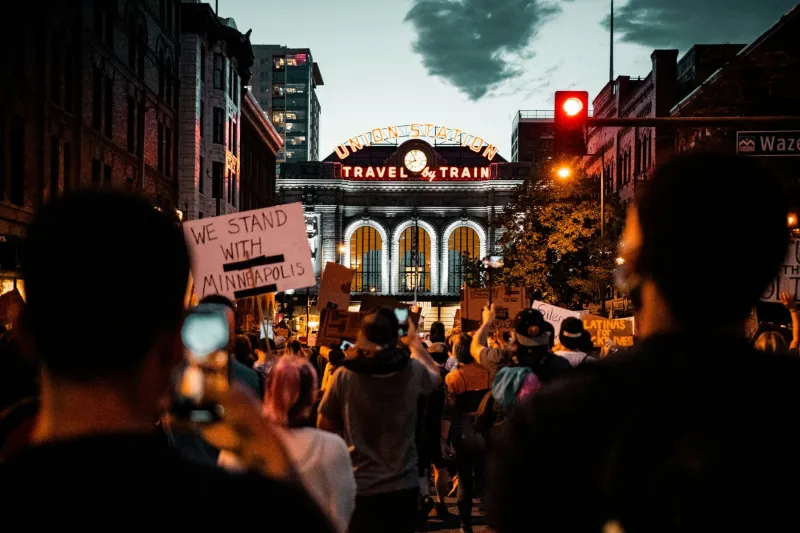
Yet the current organizing surge suggests that workers are finding ways to build collective power despite legal and political barriers. They're using social media to coordinate campaigns, leveraging consumer pressure through boycotts and publicity, and building solidarity across workplaces and industries.
The question isn't whether the labor movement will continue growing—current trends suggest it will. The question is whether political leaders and media institutions will recognize this revival as the transformative force it represents rather than treating it as a curiosity from America's industrial past.
Progress isn't just a direction; it requires the organizational power to move in that direction, and nothing builds that power more effectively than workers standing together for dignity, fairness, and collective prosperity.