Government on a Shoestring: How Poverty-Level Legislator Pay Ensures the People Writing Your Laws Don't Look Like You
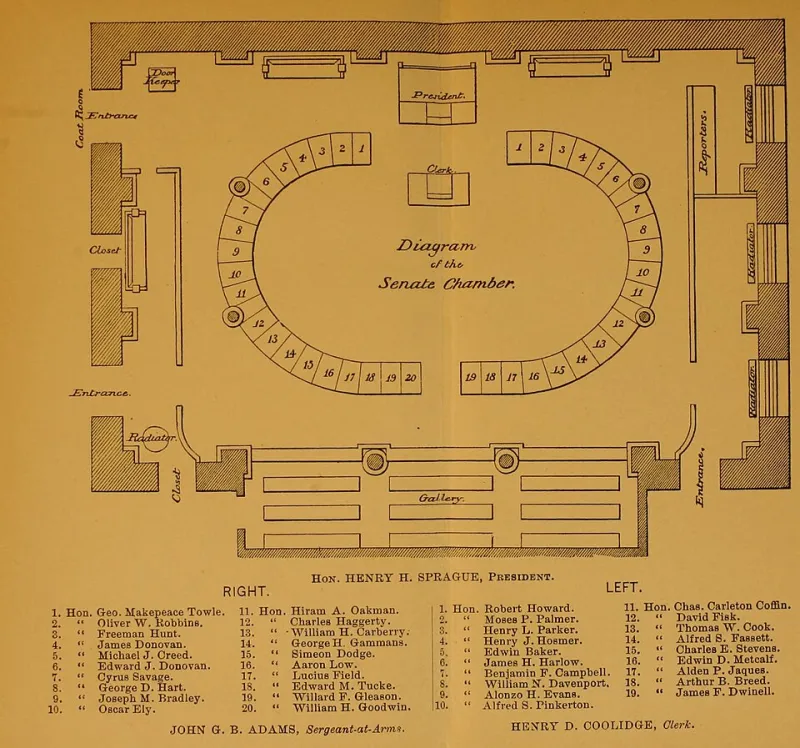
Photo: Unknown authorUnknown author, Public domain, via Wikimedia Commons
The Price of Running for Office
In New Hampshire, state legislators earn $100 per year — a stipend so nominal it functions less as compensation than as a formality. In New Mexico, legislators receive no salary at all during session, only a daily expense allowance. In Texas, the legislature meets for just 140 days every two years, with an annual salary of $7,200. In Arizona, the salary is $24,000 annually. In South Carolina, it is just under $11,000.
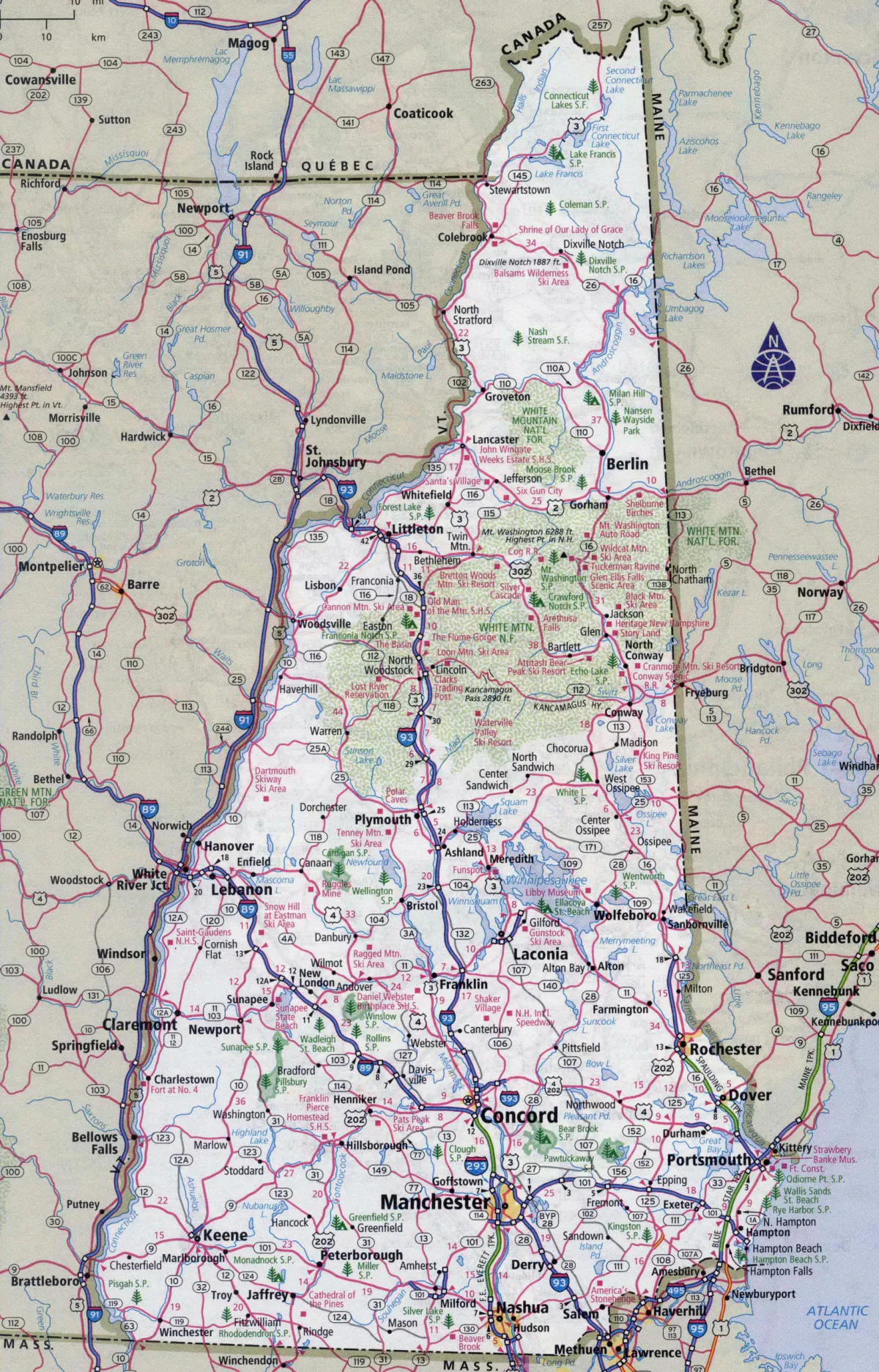 Photo: New Hampshire, via www.vidiani.com
These are not asterisks in an otherwise adequate compensation structure. They are the compensation structure. And the consequences for who actually serves — and who is systematically excluded from serving — are as predictable as they are underreported.
State legislatures are not minor institutions. They set education funding formulas that determine how much money your child's school receives. They draw the maps that govern congressional representation. They regulate healthcare providers, set minimum wages, determine Medicaid eligibility, and write the criminal codes under which people are prosecuted and imprisoned. In the post-Dobbs landscape, they have assumed direct control over reproductive healthcare access for tens of millions of Americans. These are consequential decisions, made by people whose economic backgrounds shape their instincts, their networks, and their priorities in ways that are rarely acknowledged.
Who Can Afford to Serve
A 2021 study by the National Conference of State Legislatures found that the most common occupations among state legislators are, in order: business owners, lawyers, and retirees. Teachers, nurses, construction workers, retail employees, and service industry workers are represented at a fraction of their share of the general workforce. Single parents are nearly invisible. People who live paycheck to paycheck — which, according to Federal Reserve survey data, describes roughly 40 percent of American adults — are, for practical purposes, ineligible.
This is not a mystery. It is arithmetic. If a state legislature pays $10,000 a year and requires you to be in the state capital for four to five months, you need an independent source of income to survive. Business owners can run their businesses remotely or delegate management. Retirees have pensions or investment income. Lawyers can take a leave of absence with a reasonable expectation of returning to their practice. A registered nurse working three 12-hour shifts a week, a warehouse supervisor on an hourly wage, or a schoolteacher with a mortgage and two children in daycare cannot absorb a 70 percent pay cut for the privilege of public service.
The result is not ideologically neutral. It structurally advantages people whose economic interests align with low taxation, light regulation, and minimal labor protections — because those are the people who can afford to be in the room.
The Employer-Backed Legislator Problem
Low legislative salaries do not only filter out working-class candidates. They create a second, less-discussed problem: the legislator who is effectively subsidized by an employer with a direct interest in state policy.
In many state legislatures, a significant portion of members are small business owners whose companies benefit from the regulatory and tax decisions the legislature makes. Others are employed by industries — real estate, insurance, agriculture, energy — that are directly regulated by state law. Some serve with the tacit or explicit support of employers who continue to pay their salaries or hold their positions during legislative sessions. This arrangement is not always corrupt in a legal sense. But it creates a systematic conflict of interest that is difficult to disentangle from the legislative record.
When the Iowa legislature debates workers' compensation reform, it matters whether the people voting on it are workers who have been injured on the job or employers who pay the premiums. When the Florida legislature considers insurance regulation, it matters whether the members deliberating are policyholders or insurance executives. Low salaries that make employer backing a practical necessity for many legislators are not a neutral feature of the system. They are a thumb on the scale.
The Counterargument: Citizen Legislators and the Virtue of Part-Time Government
The strongest defense of low legislative pay rests on the concept of the citizen legislator — the Jeffersonian ideal of the farmer or tradesperson who serves a term or two in the statehouse and then returns to private life, bringing practical wisdom and community rootedness that career politicians lack. This is not a trivial vision. There is genuine value in legislative bodies that are not dominated by professional political operatives, and there are real risks in creating state legislatures that become feeders for lobbyist careers and lifetime political employment.
But the citizen legislator ideal, as it exists in practice, has a class problem that its advocates rarely confront directly. The citizen who can most easily take a few months away from private life to serve in the legislature is not the median American worker. It is the American who has accumulated enough capital, flexibility, or institutional support to absorb the income disruption. The citizen legislator, in 2025, is most often a business owner or a retiree. The Jeffersonian farmer has been replaced by the Jeffersonian entrepreneur, and the effect on policy is not incidental.
A part-time legislature that pays a living wage would preserve the citizen legislator's civic spirit while removing the financial barrier that makes the concept available only to the already-comfortable. These two goals are not in tension. The decision to keep salaries poverty-level is not a principled commitment to civic virtue. It is an economic filter dressed in constitutional nostalgia.
The Human Cost of Underrepresentation
Consider what is lost when a state legislature contains no nurses. Nursing is the largest healthcare profession in the United States, with nearly 4.4 million registered nurses according to the Bureau of Labor Statistics. Nurses understand, from direct experience, how Medicaid reimbursement rates affect patient care, how short-staffing mandates endanger safety, how hospital consolidation changes the quality of community health. Their absence from the rooms where healthcare policy is made is not a demographic curiosity. It is a policy failure.
The same logic applies to teachers, who understand school funding formulas with an intimacy that no education lobbyist can replicate. To warehouse workers and delivery drivers, who understand the gap between OSHA regulation on paper and safety conditions on the floor. To tenants, who understand what eviction law means at 2 a.m. when the sheriff arrives. These perspectives do not simply add diversity to legislative deliberation. They change its content — the questions that get asked, the tradeoffs that get noticed, the consequences that get anticipated.
When these voices are absent, the policies that emerge reflect the priorities and blind spots of those who remain. The evidence is not hard to find. States with the lowest legislative salaries and the most business-owner-dominated legislatures have, in aggregate, weaker labor protections, lower minimum wages, more restrictive union laws, and more regressive tax structures than states with more professionalized and better-compensated legislatures. Correlation is not causation, but the pattern is consistent enough to be informative.
What It Would Actually Cost to Fix This
Raising state legislative salaries to a level that reflects the seriousness of the work — say, the median household income in each state, which ranges roughly from $55,000 to $90,000 — would cost, in most states, a few million dollars annually at most. For a state budget that typically runs into the tens of billions, this is a rounding error. The political resistance to it is not fiscal. It is ideological: the same forces that benefit from legislatures dominated by business owners have every incentive to keep the salary structure that produces them.
Some states have begun to move. California pays its legislators approximately $128,000 annually, a salary that reflects the full-time demands of governing the world's fifth-largest economy. New York pays roughly $142,000. These are not perfect legislatures, but they are legislatures where a teacher or a social worker can plausibly serve without financial ruin.
The direction of progress is not complicated: pay legislators enough that the job is accessible to people who work for a living. The alternative — a democracy where the people writing the laws are structurally selected from among those who need them least — is not conservatism. It is oligarchy with a ballot box attached.