The Preemption Trap: How Republican State Legislatures Are Blocking Progressive Cities From Governing Themselves
Democracy Dies in Statehouses
In Birmingham, Alabama, the city council voted to raise the minimum wage to $10.10 an hour—a modest increase that would have lifted thousands of workers out of poverty. Within weeks, the Republican-controlled state legislature passed a law prohibiting any Alabama city from setting wages above the federal minimum. The Birmingham ordinance was dead before it could help a single worker.
 Photo: Birmingham, Alabama, via thumbs.dreamstime.com
This story has played out hundreds of times across America in recent years, as Republican state governments have discovered preemption: the practice of passing state laws that explicitly prohibit local governments from enacting more progressive policies. From Texas to Florida to Tennessee, red-state legislatures are systematically nullifying the democratic choices of their own cities.
The Preemption Playbook
Preemption laws now cover virtually every area of progressive policy. According to the Economic Policy Institute, 25 states have banned local minimum wage increases. Twenty-four states prohibit cities from requiring employers to provide paid sick leave. Forty-two states prevent localities from enacting stronger gun safety measures than state law allows.
The pattern is consistent: urban areas, often representing the majority of a state's population and economic output, vote for policies that reflect their values and needs. Rural-dominated state legislatures then pass laws making those local policies illegal, overriding the expressed will of millions of voters.
In North Carolina, the state legislature didn't just block Charlotte's LGBTQ+ nondiscrimination ordinance—they called a special session specifically to pass HB2, which prohibited any city in the state from protecting transgender residents. The economic backlash cost North Carolina hundreds of millions in lost business, but the message was clear: local democracy only matters when it produces conservative outcomes.
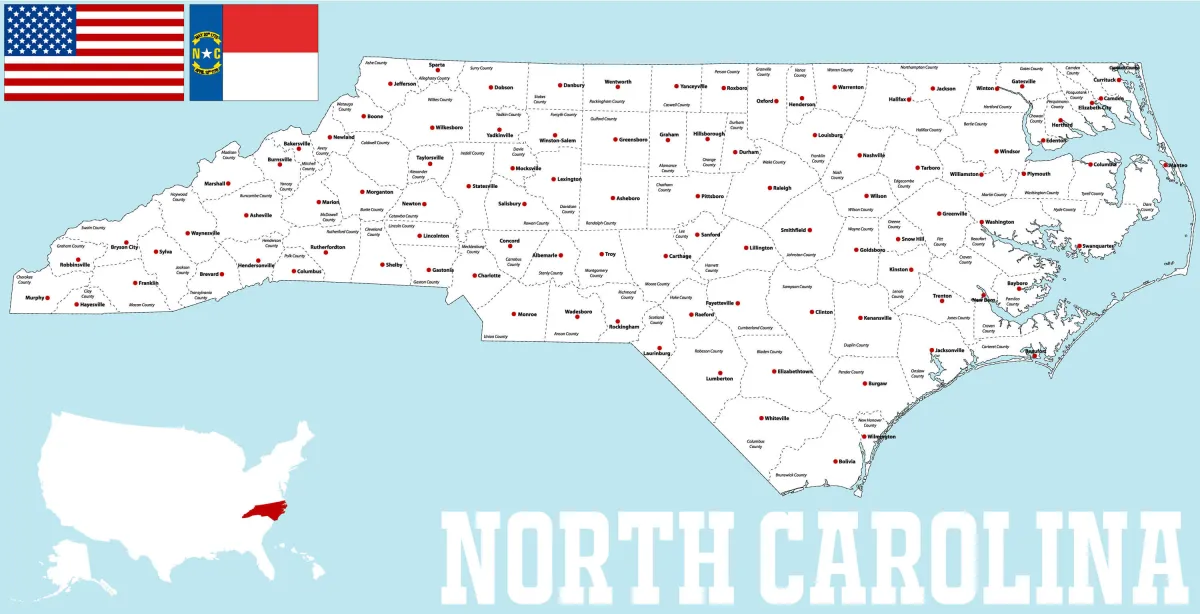 Photo: North Carolina, via www.guideoftheworld.com
The Hypocrisy of "Local Control"
For decades, conservative politicians have championed local control as a core principle, arguing that government works best when it's closest to the people. This rhetoric crumbles under examination of actual preemption practices. The same legislators who invoke "local control" to oppose federal regulations eagerly crush local autonomy when cities try to raise wages, protect tenants, or expand civil rights.
The selective application of subsidiarity reveals its true purpose: not principled federalism, but strategic power maximization. When local control produces conservative outcomes—like restricting reproductive rights or limiting environmental regulations—it's celebrated. When it produces progressive policies, it's preempted.
This isn't about constitutional principles; it's about ensuring that corporate interests and conservative ideology can override democratic majorities regardless of the level of government involved.
The Economic Weapon
Preemption particularly targets economic policies that would shift power toward workers and tenants. A 2019 analysis by the National Employment Law Project found that preemption laws have blocked wage increases that would have benefited over 40 million American workers. These aren't abstract policy debates—they represent billions of dollars in wages that have been legislatively transferred from workers to employers.
Tenant protection preemption follows the same pattern. As housing costs skyrocket in cities across the country, local governments have tried to implement rent stabilization, just-cause eviction protections, and inclusionary zoning requirements. State preemption laws have systematically blocked these efforts, ensuring that housing remains a pure market commodity rather than a human right.
The result is a system where cities bear the social and economic costs of inequality—homelessness, poverty, inadequate healthcare—but are prohibited from implementing the policies that might address root causes.
The Racial Dimension
Preemption laws disproportionately harm communities of color, who are overrepresented in the urban areas most affected by these policies. When states block local minimum wage increases, they're primarily blocking wage increases for Black and Latino workers, who make up a disproportionate share of low-wage urban workforces.
Similarly, when states preempt local tenant protections, they're enabling displacement and gentrification that falls hardest on communities of color. The intersection of preemption and structural racism isn't coincidental—it's a feature of a system designed to maintain existing hierarchies of power and wealth.
The Democratic Deficit
Perhaps most perniciously, preemption creates a democratic deficit where the majority is systematically outvoted by the minority. Urban areas typically contain 60-70% of a state's population but receive minority representation in state legislatures due to geographic districting and, in many cases, deliberate gerrymandering.
This means that policies supported by clear majorities of state residents can be blocked by legislators representing a minority of the population. When Birmingham tried to raise its minimum wage, polls showed that over 60% of Alabama residents supported the increase. The state legislature killed it anyway.
Fighting Back
Some cities have found creative ways around preemption, using procurement policies, development incentives, and other indirect tools to achieve progressive goals. Others have joined lawsuits challenging preemption laws as violations of local home rule authority.
But the most effective response has been political: supporting candidates for state legislature who respect local democracy, regardless of the policy outcomes. This requires progressive movements to think beyond city limits and invest in state-level political infrastructure.
The Stakes
Preemption represents more than a policy disagreement—it's a fundamental question about who gets to participate in American democracy. When state governments systematically override the choices of their most populous, diverse, and economically productive communities, they're not protecting federalism; they're undermining it.
The choice facing American democracy is whether local majorities have the right to govern themselves, or whether that right exists only when it produces outcomes acceptable to rural minorities and corporate interests.