The Citizenship Tax: How America's Broken Immigration System Extracts Billions From Undocumented Workers Who Will Never See a Dime in Benefits
The Citizenship Tax: How America's Broken Immigration System Extracts Billions From Undocumented Workers Who Will Never See a Dime in Benefits
Every two weeks, Maria Gonzalez receives a paycheck from her job at a meatpacking plant in Nebraska. Like millions of undocumented workers across America, she watches as federal taxes, Social Security contributions, and Medicare withholdings are automatically deducted from her earnings. What makes this remarkable isn't the taxation — it's that Gonzalez will never be eligible to claim a single dollar of the benefits those taxes fund.
This is the citizenship tax: a massive wealth transfer from undocumented workers to the federal government that nets billions annually while remaining invisible to most Americans. According to Social Security Administration data, undocumented workers contribute approximately $13 billion per year to Social Security alone, plus billions more in Medicare taxes and federal income taxes. Yet these same workers are legally prohibited from accessing Social Security benefits, Medicare coverage, or even tax refunds in many cases.
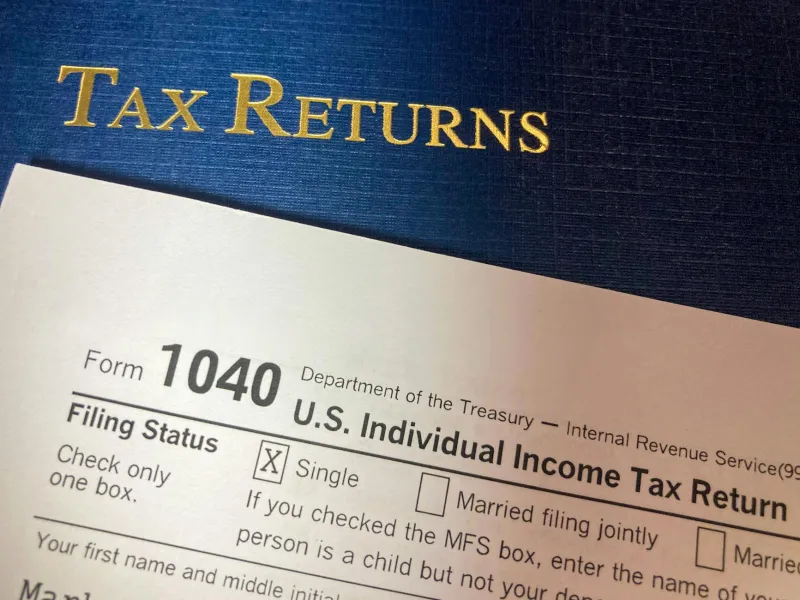
 Photo: Social Security Administration, via c8.alamy.com
The Fiscal Paradox
The numbers demolish the right-wing narrative that undocumented immigrants are fiscal drains on American society. Internal Revenue Service data shows that undocumented workers collectively pay between $10-12 billion annually in federal income taxes, often using Individual Taxpayer Identification Numbers (ITINs) when they lack Social Security numbers. State and local tax contributions add billions more through sales taxes, property taxes (whether paid directly as homeowners or indirectly as renters), and state income taxes.
Meanwhile, these same workers are systematically excluded from the safety net their taxes support. They cannot collect Social Security benefits, cannot access Medicare, are ineligible for most federal assistance programs, and in many states cannot even access emergency Medicaid beyond life-threatening situations. The result is a system that extracts wealth from workers while providing virtually nothing in return.
The Social Security Administration has acknowledged this reality in its own actuarial reports. The agency estimates that the Social Security trust fund receives a net positive contribution of approximately $12 billion annually from undocumented workers — money that helps subsidize benefits for documented workers and retirees. Without these contributions, Social Security's long-term financing challenges would be significantly worse.
The ITIN Economy
Perhaps no single policy better illustrates this extraction system than the Individual Taxpayer Identification Number program. Created in 1996, ITINs allow individuals without Social Security numbers to file tax returns and pay federal taxes. The IRS has issued over 20 million ITINs since the program's inception, with the vast majority going to undocumented workers.
ITIN holders filed 4.4 million tax returns in 2019, paying $5.9 billion in federal income taxes. These workers often cannot claim the Earned Income Tax Credit or Child Tax Credit, even when they qualify based on income and family status. They pay into systems they cannot access while being denied refunds available to documented taxpayers.
The cruel irony is that the IRS actively encourages this participation. The agency's own materials emphasize that tax obligations exist regardless of immigration status, effectively creating a parallel tax system for undocumented workers that maximizes revenue extraction while minimizing benefit access.
State-Level Extraction
The citizenship tax extends far beyond federal programs. State and local governments collect billions annually from undocumented workers through sales taxes, property taxes, gas taxes, and state income taxes. A 2017 study by the Institute on Taxation and Economic Policy found that undocumented immigrants contribute $11.74 billion in state and local taxes annually.
Yet these same workers often cannot access state-funded services their taxes support. They're excluded from in-state tuition rates at public universities, barred from professional licensing programs, and ineligible for state-funded healthcare programs in most states. The taxation without representation that sparked the American Revolution pales in comparison to this systematic exclusion.
Consider Texas, where undocumented workers contribute an estimated $2.6 billion annually in state and local taxes. These workers help fund public schools their children attend, but cannot access state financial aid for higher education. They pay property taxes that support local infrastructure, but live in fear of deportation if they report crimes or seek police protection.
The Employer Advantage
This system creates perverse incentives for employers who benefit from both lower labor costs and reduced benefit obligations. Many employers prefer undocumented workers precisely because they can pay Social Security and Medicare taxes without ever facing benefit claims. It's a form of wage theft subsidized by federal policy.
When undocumented workers use false Social Security numbers, their contributions often end up in the Social Security Administration's "Earnings Suspense File" — a repository of wage reports that cannot be matched to legitimate Social Security numbers. This file contains over $1.4 trillion in wages reported since 1937, representing the largest unclaimed fund in federal government history.
Employers know this dynamic and exploit it ruthlessly. They can offer below-market wages while pointing to payroll tax obligations as evidence of compliance. Meanwhile, they face minimal enforcement risk — Immigration and Customs Enforcement worksite investigations have plummeted over the past decade, while Department of Labor wage and hour enforcement remains chronically underfunded.
The Human Cost
Behind these fiscal abstractions are real people whose labor subsidizes a system designed to exclude them. Undocumented workers in physically demanding industries like agriculture, construction, and meatpacking pay into disability insurance programs they cannot access. They contribute to unemployment insurance while being ineligible for benefits if they lose their jobs.
The COVID-19 pandemic exposed this cruelty in stark terms. Undocumented workers deemed "essential" continued working in dangerous conditions while being excluded from unemployment benefits, stimulus payments, and expanded healthcare coverage. They literally paid taxes that funded relief programs they could not access, even as they faced disproportionate infection and death rates.
This exclusion extends to their families. U.S.-born children of undocumented workers are citizens entitled to benefits, but their parents' fear of deportation often prevents them from accessing programs like SNAP or Medicaid. The result is American citizen children living in poverty while their parents' taxes fund safety net programs they cannot use.
Reform That Matches Reality
The citizenship tax reveals the fundamental dishonesty of current immigration policy. America wants undocumented workers' labor and tax contributions, but refuses to acknowledge their humanity or provide basic protections. This system serves corporate interests while undermining both undocumented workers and documented workers who face unfair wage competition.
Real reform would align policy with economic reality. Comprehensive immigration reform with a path to legal status would allow undocumented workers to claim the benefits their taxes fund while enabling them to report workplace violations and demand fair wages. This would benefit all workers by eliminating the two-tiered system that currently suppresses wages across entire industries.
Short of comprehensive reform, targeted changes could reduce the most egregious aspects of the citizenship tax. Allowing ITIN holders to claim refundable tax credits, providing work authorization for long-term residents, and ensuring access to emergency services regardless of immigration status would represent meaningful progress.
Beyond the Numbers
The citizenship tax is more than a fiscal policy failure — it's a moral indictment of a system that treats human beings as revenue sources while denying their basic dignity. Every paycheck that deducts taxes from an undocumented worker represents both an economic contribution and a fundamental injustice.
America cannot continue pretending that undocumented workers are fiscal burdens while simultaneously extracting billions from their labor. The choice is clear: acknowledge the economic reality of undocumented contributions and provide a path to legal status, or admit that current policy is designed to exploit the vulnerable while enriching the powerful.
The citizenship tax proves that undocumented workers aren't taking from America — America is taking from them.