The Tribal Sovereignty Siege: How Federal Budget Cuts and Legal Rollbacks Are Dismantling Native Nations' Right to Self-Govern
The Quiet War on Native Self-Determination
Across Indian Country, a coordinated assault on tribal sovereignty is unfolding through bureaucratic channels, budget cuts, and regulatory rollbacks that rarely make national headlines. While the American public debates democracy and self-governance in abstract terms, 574 federally recognized tribal nations are fighting to preserve their concrete, treaty-guaranteed right to govern themselves against a federal system that increasingly treats Native sovereignty as an administrative inconvenience.
This isn't the dramatic cavalry-and-settlers narrative of historical westerns. It's a modern bureaucratic siege that uses funding freezes, regulatory delays, and legal technicalities to accomplish what military force could not: the systematic dismantling of Indigenous nations' capacity to govern their own people and protect their own lands.
Death by a Thousand Budget Cuts
The federal government's trust responsibility to tribal nations—established through hundreds of treaties and codified in federal law—is being slowly strangled through chronic underfunding and administrative neglect. The Indian Health Service operates on roughly half the per-capita funding of other federal health programs, leaving tribal communities with life expectancy rates that lag behind the national average by several years.
But the assault goes deeper than simple underfunding. Federal agencies are increasingly using bureaucratic delays and regulatory changes to limit tribal nations' ability to exercise their sovereignty. Environmental protection projects on tribal lands face years-long approval processes that don't apply to similar projects in non-tribal areas. Economic development initiatives are stalled by federal agencies that seem more interested in maintaining bureaucratic control than honoring treaty obligations.
The Bureau of Indian Affairs, supposedly the federal agency charged with upholding the government-to-government relationship with tribes, has seen its budget repeatedly slashed while its regulatory oversight has expanded. This creates a perverse dynamic where the federal government has less capacity to fulfill its trust obligations but more power to interfere with tribal self-governance.
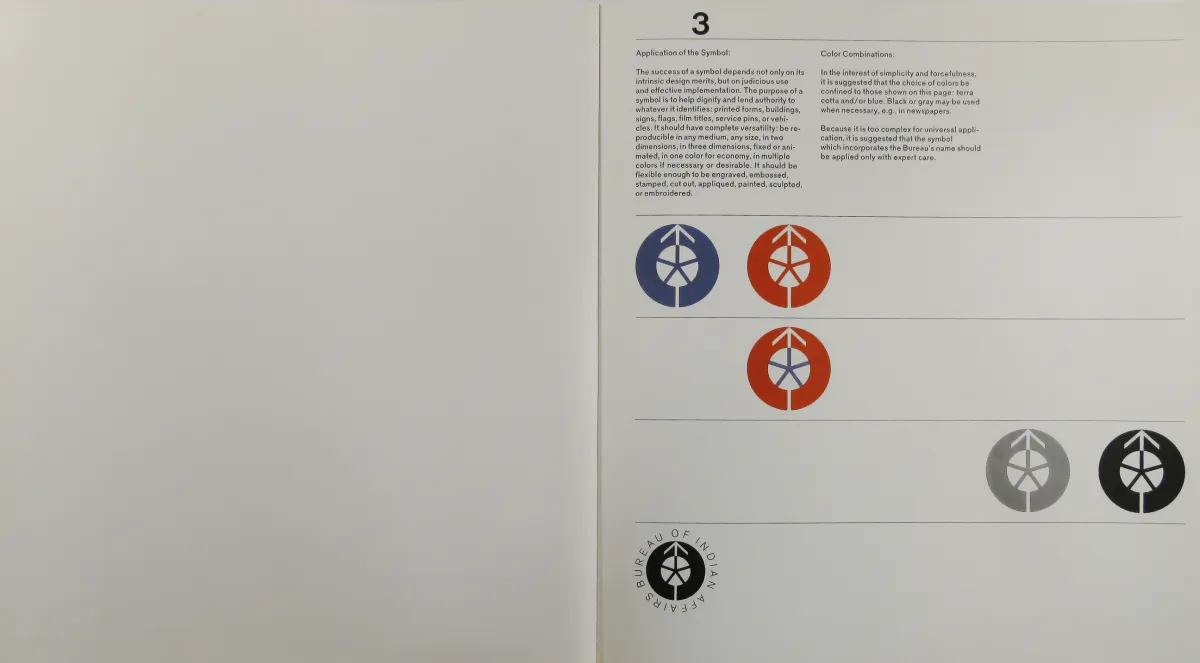 Photo: Bureau of Indian Affairs, via assets.paulrand.design
Regulatory Rollbacks and Legal Erosion
Recent years have seen a systematic rollback of regulations that protected tribal sovereignty and treaty rights. Environmental protections for sacred sites have been weakened through expedited permitting processes that bypass tribal consultation requirements. Water rights, the lifeblood of many tribal communities, are being challenged through legal maneuvers that seek to relitigate century-old treaty obligations.
The Supreme Court's recent trend toward limiting federal authority might seem like it would strengthen tribal sovereignty, but the opposite is happening. Court decisions that limit federal power often simultaneously limit federal obligations to tribes, leaving Native nations caught between state governments that don't recognize their authority and a federal government that increasingly refuses to protect their rights.
This legal erosion is particularly devastating because tribal sovereignty exists within a unique constitutional framework. Unlike states, which derive their authority from the Constitution, tribal nations are pre-constitutional entities whose sovereignty predates the United States itself. Yet this fundamental distinction is being obscured by legal arguments that treat tribes as just another form of local government rather than sovereign nations.
The Corporate Extraction Agenda
Behind many of these attacks on tribal sovereignty lies a corporate agenda focused on resource extraction and land development. Tribal lands contain an estimated 20% of America's oil and gas reserves, 30% of coal reserves west of the Mississippi, and vast deposits of uranium and other minerals. The push to weaken tribal sovereignty often coincides with corporate interests in accessing these resources without meaningful tribal consent.
The Dakota Access Pipeline controversy exemplified this dynamic: a project that threatened tribal water supplies and sacred sites was pushed through with minimal tribal consultation, while law enforcement agencies used military-style tactics against peaceful protesters. The message was clear—corporate profits matter more than treaty rights or Indigenous self-determination.
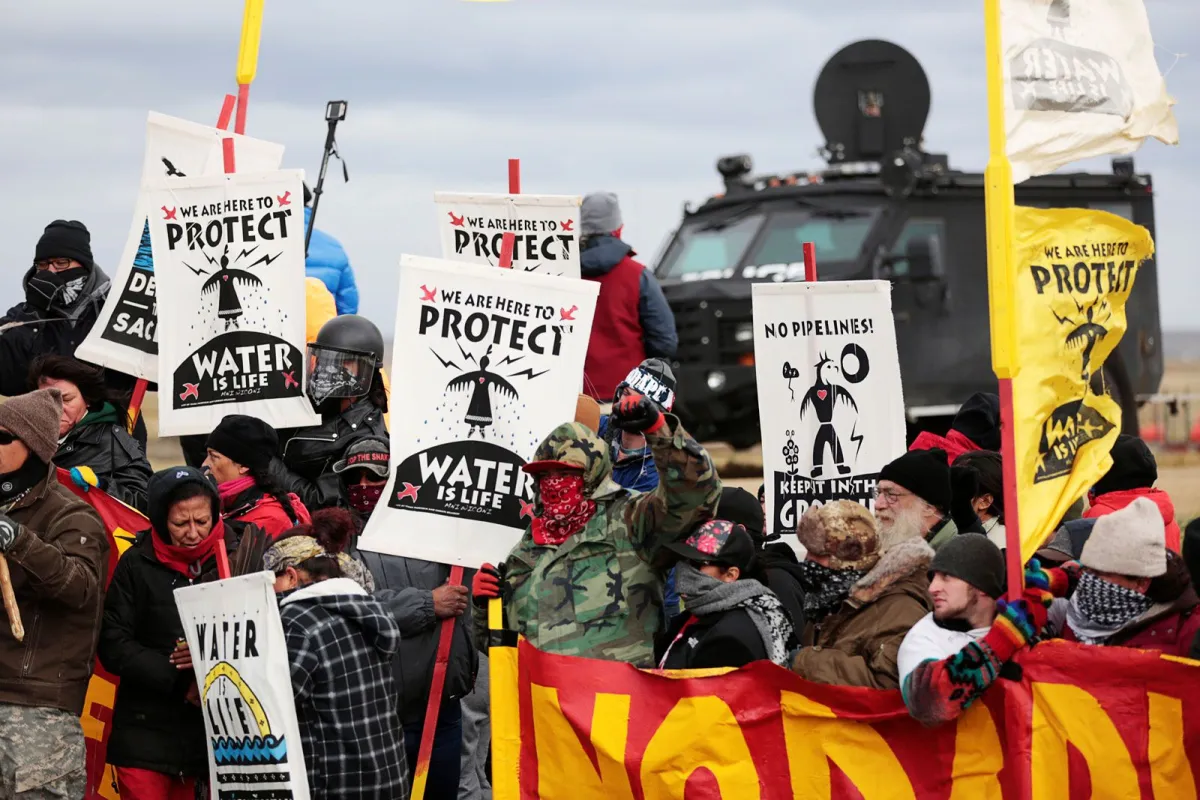 Photo: Dakota Access Pipeline, via cdn.britannica.com
Similar patterns are playing out across Indian Country. Mining companies lobby for regulatory changes that would limit tribal environmental oversight. Energy companies push for expedited permitting processes that bypass tribal consultation requirements. Development interests advocate for legal interpretations that would shrink the boundaries of tribal jurisdiction.
The Human Impact of Sovereignty Erosion
The assault on tribal sovereignty isn't an abstract legal matter—it has concrete consequences for the 5.2 million American Indians and Alaska Natives living in the United States. When tribal nations lose the ability to govern effectively, their communities suffer.
Tribal courts, which handle everything from child custody cases to criminal justice matters, are being starved of resources while facing increased federal interference. Tribal law enforcement agencies operate with budgets that are a fraction of comparable non-tribal departments, yet they're expected to police vast territories with limited backup from federal authorities.
Education, healthcare, and social services on tribal lands all depend on the federal government fulfilling its trust obligations. When these obligations are ignored or underfunded, tribal communities bear the cost. Suicide rates among Native youth are more than twice the national average. Poverty rates on reservations can exceed 40%. These aren't accidents—they're the predictable results of policies that systematically undermine tribal nations' ability to care for their own people.
The Broader Stakes for American Democracy
The attack on tribal sovereignty should concern all Americans who value democracy and self-determination. If the federal government can systematically erode the treaty rights of sovereign nations through bureaucratic manipulation and legal technicalities, what other commitments might it abandon when convenient?
Tribal nations have often served as laboratories for innovative approaches to governance, environmental protection, and community development. Many tribes have implemented sophisticated justice systems that emphasize restoration over punishment, developed sustainable economic models that balance profit with environmental stewardship, and created social programs that strengthen rather than fragment communities.
When federal policies undermine tribal sovereignty, America loses access to these alternative models of governance at precisely the moment when our traditional institutions are facing crisis. The wisdom and experience of Indigenous nations could inform broader efforts to address climate change, reduce inequality, and strengthen democratic participation—but only if those nations retain the sovereignty necessary to govern effectively.
Fighting Back Through Law and Organizing
Tribal nations are not passive victims in this struggle. Across Indian Country, tribes are fighting back through federal courts, lobbying efforts, and grassroots organizing. The National Congress of American Indians serves as a powerful advocacy organization, while individual tribes are pursuing innovative legal strategies to protect their sovereignty.
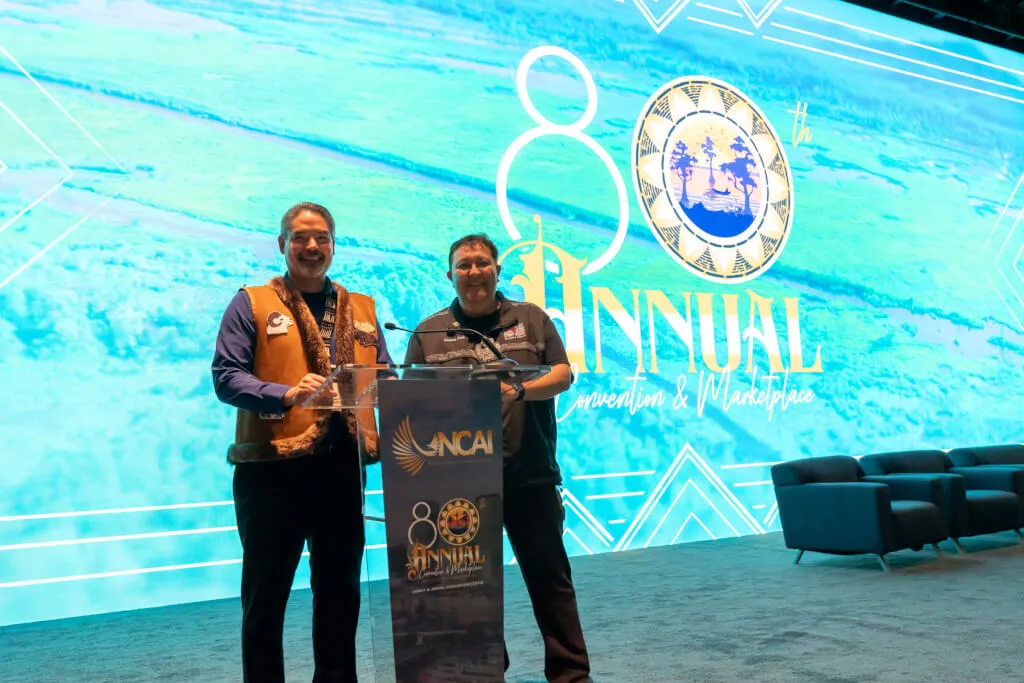 Photo: National Congress of American Indians, via www.tananachiefs.org
Some of the most effective resistance has come through inter-tribal cooperation and alliance-building with non-Native environmental and civil rights organizations. The fight against the Dakota Access Pipeline demonstrated the power of these coalitions, while ongoing battles over sacred sites and water rights continue to build broader support for tribal sovereignty.
The path forward requires both legal victories and political mobilization. Americans who believe in democracy and self-determination must recognize that the fight for tribal sovereignty is part of the broader struggle for democratic governance and human rights.
The federal government's systematic assault on tribal sovereignty represents a betrayal of both legal obligations and moral principles, but it also represents an opportunity for renewal—a chance to build a more just relationship between the United States and the Indigenous nations that have called this continent home for thousands of years.