The Energy Justice Bottleneck: How America's Weatherization Program Keeps Low-Income Families Cold While Utilities Cash In

The Endless Wait for Warmth
Across America, nearly 35 million households spend more than 6% of their income on energy bills—the federal definition of "energy poverty." For the poorest families, that figure climbs to 20% or more, forcing impossible choices between heating and groceries, cooling and medication. The federal government has a program specifically designed to address this crisis: the Weatherization Assistance Program, administered by the Department of Energy since 1976.
There's just one problem: the waiting list is 30 years long.
This isn't hyperbole or bureaucratic inefficiency—it's the predictable result of a political system that prioritizes corporate profits over human dignity. While families shiver in drafty homes and swelter in un-insulated apartments, utility companies rake in billions from inefficient energy consumption, and fossil fuel lobbyists work overtime to gut the very programs that could provide relief.
The Numbers Don't Lie
The Weatherization Assistance Program has the potential to transform lives. Participating households see their energy bills drop by an average of $283 per year—money that can mean the difference between keeping the lights on and falling behind on rent. The program pays for itself within seven years through reduced energy consumption and improved health outcomes, as better-insulated homes reduce respiratory illnesses and heat-related emergencies.
Yet since its inception, the program has weatherized fewer than 7.5 million homes. At current funding levels of roughly $380 million annually, it serves about 35,000 households per year. With 35 million households qualifying for assistance, basic math reveals the scope of the crisis: at this pace, it would take nearly 1,000 years to reach everyone who needs help.
The human cost of this delay is staggering. Low-income households use 67% more energy per square foot than higher-income families, not because they're wasteful, but because they live in older, poorly insulated housing stock that bleeds heat in winter and traps it in summer. A 2023 study by the American Council for an Energy-Efficient Economy found that energy poverty contributes to 11,000 excess deaths annually, primarily among elderly and disabled Americans who can't afford adequate heating or cooling.
The Utility Company Windfall
While families struggle with unaffordable energy bills, utility companies have every financial incentive to maintain the status quo. Under traditional rate structures, utilities make more money when customers use more energy. A household that cuts its consumption through weatherization represents lost revenue for the power company.
This perverse incentive structure helps explain why utility industry lobbying groups have consistently opposed robust funding for weatherization programs. The Edison Electric Institute, which represents investor-owned utilities, spent $2.3 million on federal lobbying in 2023, much of it targeting provisions in the Inflation Reduction Act that would have dramatically expanded weatherization funding.
Their efforts succeeded. Despite initial proposals to invest $27 billion in home energy efficiency programs, the final legislation allocated just $9 billion—and even that reduced amount faces ongoing attacks from congressional Republicans who view energy efficiency as a threat to fossil fuel interests.
European Models Show What's Possible
The contrast with European approaches is stark and instructive. The Netherlands has committed to retrofitting 1.5 million homes by 2030 through its National Insulation Programme, which provides free whole-home energy makeovers for low-income households. France's MaPrimeRénov program has weatherized over 800,000 homes since 2020, with dedicated funding streams that don't depend on annual congressional appropriations.
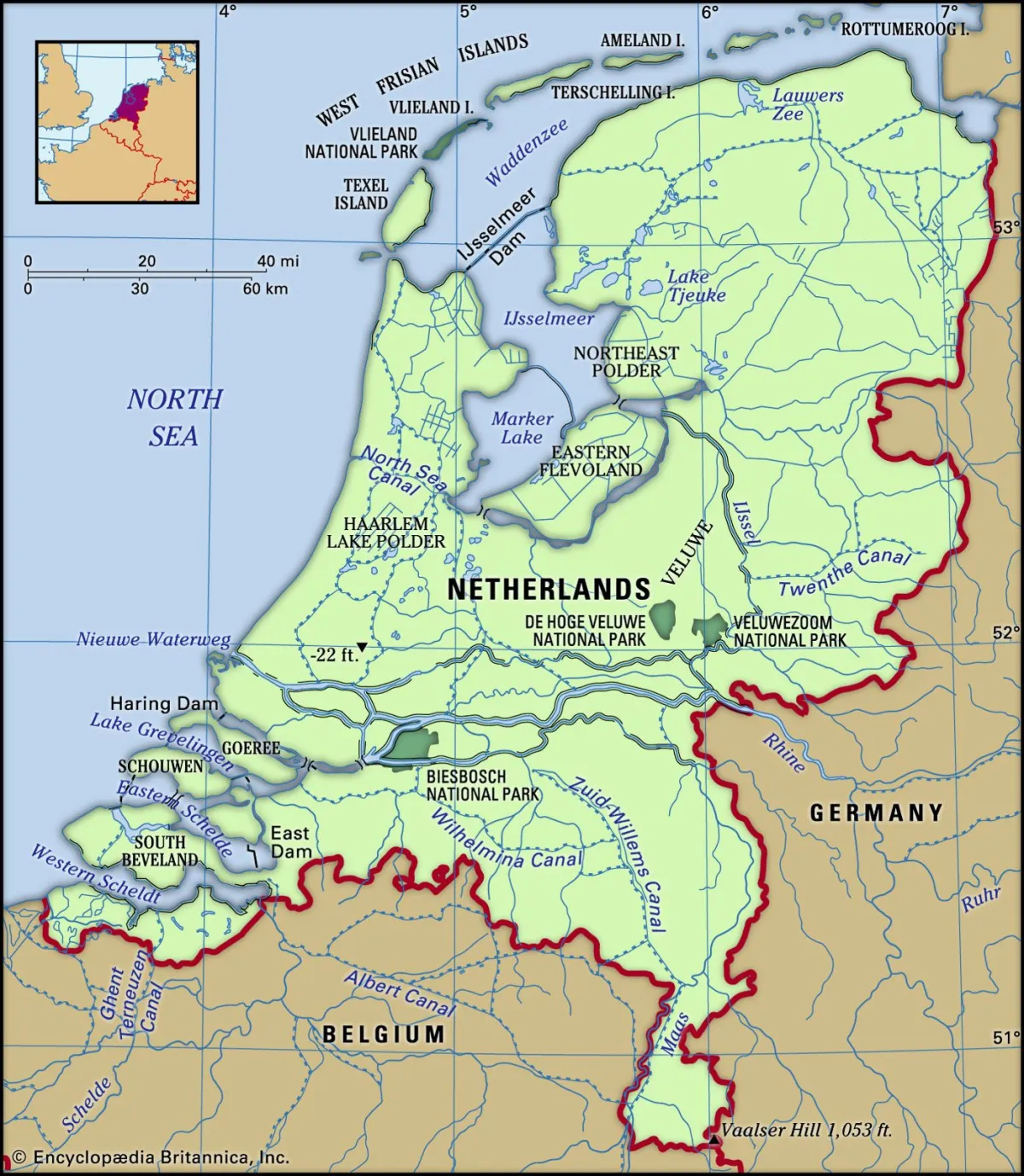 Photo: The Netherlands, via cdn.britannica.com
Germany's approach is particularly noteworthy. The country treats energy efficiency as a human right, not a charity program. Through its federal building renovation program, Germany weatherizes 200,000 homes annually—nearly six times the U.S. rate, despite having one-fourth the population. The program is funded through a combination of federal grants, low-interest loans, and utility investments that are required by law.
These programs succeed because they recognize a fundamental truth that American policymakers refuse to acknowledge: energy efficiency is infrastructure, not welfare. Just as we wouldn't expect families to pay for their own roads or water treatment plants, we shouldn't expect them to shoulder the full cost of making their homes livable.
The Climate Justice Connection
The weatherization crisis intersects with climate change in ways that make federal inaction even more unconscionable. Low-income households, who are least responsible for carbon emissions, suffer disproportionately from both energy poverty and climate impacts. They're more likely to live in urban heat islands that lack tree cover, more likely to work outdoor jobs that expose them to extreme temperatures, and less likely to have air conditioning or backup power during emergencies.
Weatherization isn't just about comfort—it's about survival. During Winter Storm Uri in 2021, which left millions of Texans without power, the majority of the 246 deaths occurred in homes that lacked adequate insulation or backup heating. Similarly, during the Pacific Northwest heat dome of 2021, most heat-related deaths occurred in poorly ventilated homes without air conditioning.
Climate change is making these extreme weather events more frequent and severe. Without massive investment in home weatherization, we're condemning millions of Americans to live in structures that are fundamentally uninhabitable during increasingly common weather emergencies.
The Political Obstruction Machine
The persistence of the weatherization waiting list isn't an accident—it's the result of deliberate political choices that prioritize corporate interests over human needs. Congressional Republicans have consistently targeted weatherization funding for cuts, arguing that energy assistance creates "dependency" and that market forces should determine energy efficiency investments.
This argument collapses under the slightest scrutiny. The "market" for home weatherization is broken by design. Landlords have no incentive to invest in efficiency improvements when tenants pay the utility bills. Homeowners often lack the upfront capital for major renovations, even when they would save money long-term. Low-income families, who would benefit most from weatherization, are systematically excluded from private financing programs that require good credit and stable income.
Meanwhile, fossil fuel companies receive $20 billion annually in federal subsidies—more than 50 times the weatherization program's budget. The government that claims it can't afford to help families heat their homes somehow finds endless resources to help oil companies extract more fossil fuels.
The Infrastructure We Need
Solving the weatherization crisis requires treating energy efficiency as essential infrastructure, not optional charity. This means guaranteed funding that doesn't depend on annual congressional fights, universal access regardless of immigration status or rental arrangements, and programs that address whole-home needs rather than piecemeal improvements.
The Biden administration's Inflation Reduction Act included important down payments on this vision, but implementation has been slow and funding remains inadequate. State energy offices, which administer weatherization programs, report that demand far exceeds their capacity to respond. Many have stopped accepting new applications entirely, unwilling to add families to waiting lists that already stretch decades.
Congress could eliminate the weatherization waiting list within a decade by increasing annual funding to $4 billion—less than the Pentagon spends on military bands. This investment would create hundreds of thousands of jobs in construction and energy auditing, reduce carbon emissions equivalent to taking 3 million cars off the road, and prevent thousands of heat- and cold-related deaths.
Justice Delayed Is Justice Denied
Every winter that passes without action means more families choosing between heat and groceries, more children developing asthma in moldy apartments, more elderly Americans dying from hypothermia in their own homes.
The weatherization waiting list is a policy choice, not a natural disaster—and like all policy choices, it can be unmade by leaders with the courage to prioritize human dignity over corporate profits.