Ratification Limbo: How a Two-Thirds Senate Rule Has Kept America Outside the World's Most Critical Agreements
The Rule That Became a Roadblock
The United States has not ratified the United Nations Convention on the Rights of the Child. It has not ratified the Convention on the Elimination of All Forms of Discrimination Against Women. It signed the Kyoto Protocol in 1998 and never ratified it. It negotiated the Comprehensive Nuclear-Test-Ban Treaty, signed it in 1996, and watched the Senate reject it in 1999 — the only NATO ally to do so. On issue after issue, across administration after administration, America shows up at the negotiating table, helps draft the agreement, and then walks away from the binding commitment.
 Photo: United Nations, via cdn.britannica.com
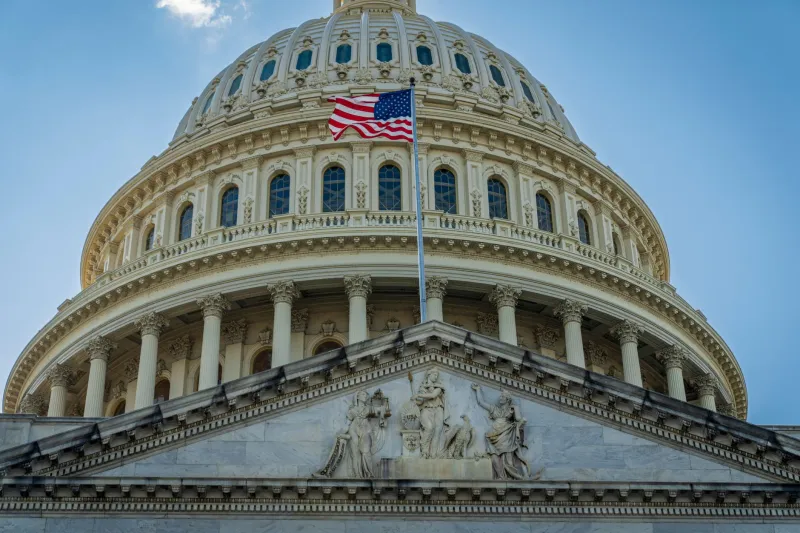
The mechanism behind this pattern is Article II, Section 2 of the Constitution, which requires a two-thirds majority of the Senate to ratify any treaty. That threshold — 67 votes — was designed by the framers to ensure broad consensus before the country made binding international commitments. In the 21st century, it has become something else entirely: a structural guarantee that a minority of senators, representing a minority of the American public, can indefinitely veto the country's participation in the global legal order.
The Math of Minority Rule
The Senate's representational distortion is by now well-documented. Because every state receives two senators regardless of population, Wyoming's roughly 580,000 residents carry the same Senate weight as California's 39 million. When you calculate the minimum number of Americans whose senators could block a treaty ratification — 34 senators representing the smallest states is all it takes — the numbers become stark. A bloc of senators representing well under 20 percent of the U.S. population can permanently prevent the country from joining an international agreement supported by the vast majority of Americans.
Consider climate. Polling consistently shows that roughly two-thirds of Americans support stronger action on climate change, including binding international commitments. Yet the Senate's two-thirds threshold, combined with its structural rural bias, means that fossil-fuel-state senators — many of whom represent states with smaller populations than some American cities — hold effective veto power over any climate treaty, no matter how broadly popular. This is not democratic accountability. It is minority rule dressed in constitutional language.
What America Has Walked Away From
The list of unratified or abandoned agreements is a chronicle of American isolation from the progressive international consensus. The Rome Statute establishing the International Criminal Court — signed by President Clinton, unsigned by President Bush, never ratified. The Arms Trade Treaty — signed by President Obama in 2013, never submitted to the Senate. The Convention on the Rights of Persons with Disabilities, modeled largely on America's own Americans with Disabilities Act, failed ratification in 2012 when 38 Republican senators voted no, citing baseless fears about national sovereignty.
 Photo: International Criminal Court, via www.worldatlas.com
The Kyoto Protocol's collapse is perhaps the most consequential example. After the U.S. helped negotiate the agreement and Vice President Gore signed it in 1997, the Senate passed a preemptive resolution — the Byrd-Hagel Resolution — by 95 to 0, signaling it would not ratify any climate agreement that exempted developing nations. The Clinton administration never submitted the treaty. The Bush administration formally withdrew. The scientific consensus on climate change was already clear by then. The political will to act on it was not, and the supermajority requirement provided the perfect procedural shelter for inaction.
The Executive Agreement Workaround — and Its Limits
Administrations of both parties have responded to treaty gridlock by relying on executive agreements — international commitments made by the president alone, without Senate ratification. The Paris Agreement, signed by President Obama in 2016, was structured specifically to avoid the Senate. That structural choice meant it could be undone just as easily: President Trump withdrew from it in 2017. President Biden rejoined it in 2021. President Trump withdrew again in 2025.
This is not stability. This is not the kind of durable, enforceable international commitment that the global community — or the American public — deserves. Executive agreements are inherently provisional, tied to the political fortunes of whoever occupies the White House at a given moment. Real treaties, ratified with Senate consent, carry the force of domestic law. They bind future administrations. They signal genuine national commitment rather than the personal priorities of a single president. The fact that America has been forced to govern its most important international relationships through the less durable mechanism is a direct consequence of the ratification threshold's functional impossibility.
The Diplomatic and Human Cost
America's treaty isolation carries concrete consequences that extend far beyond diplomatic prestige. Countries that have ratified the UN Convention on the Rights of the Child — every member state of the United Nations except the United States — are legally bound to prioritize children's welfare in their domestic policy frameworks. American children have no equivalent international legal protection, and the U.S. government faces no binding international accountability mechanism when it separates families at the border, incarcerates minors, or cuts child nutrition programs.
On nuclear nonproliferation, the failure to ratify the Comprehensive Nuclear-Test-Ban Treaty weakens the international norm against testing and gives cover to states like India, Pakistan, and North Korea that cite American non-participation as justification for their own positions. On human rights, the failure to ratify CEDAW leaves the United States in the company of Iran, Somalia, and Sudan as the only countries that have not done so. These are not abstract diplomatic embarrassments. They reflect and reinforce a domestic political culture in which international human rights obligations are treated as optional.
The Strongest Counterargument — and Why It Fails
Defenders of the two-thirds threshold argue that it protects American sovereignty, prevents hasty entanglement in flawed international agreements, and ensures that only genuinely consensual commitments become binding law. This is not a trivial concern. International agreements can contain provisions that conflict with domestic law, impose obligations that are difficult to reverse, and create accountability mechanisms that are imperfect at best.
But this argument proves too much. The sovereignty objection was used to block the Convention on the Rights of Persons with Disabilities — an agreement modeled on American law, negotiated by American diplomats, and supported by former Senate Majority Leader Bob Dole, who appeared on the Senate floor in a wheelchair to urge ratification. When sovereignty concerns are invoked to reject an agreement that America itself wrote, the argument has ceased to be principled and become merely reflexive.
The two-thirds threshold does not produce careful, considered treaty rejection. It produces blanket paralysis, driven by partisan calculation and lobbying pressure from industries — fossil fuels, weapons manufacturers, private healthcare — that benefit from American non-participation in binding international frameworks.
What Moving Forward Looks Like
Constitutional amendment of the ratification threshold is, practically speaking, not on the near-term agenda. What is possible is a more deliberate political strategy: building public awareness that America's international isolation on climate, arms, and human rights is not inevitable or natural, but the product of a specific structural choice that can be challenged. Reforming how executive agreements are protected from unilateral reversal — through legislation requiring congressional approval to exit major international commitments — would be a meaningful first step.
Most fundamentally, the public deserves to understand that when America stands alone outside the world's most important agreements, it is not because the country has made a considered, democratic judgment to do so. It is because a procedural rule allows a minority of senators — responsive to a minority of donors and industries — to make that judgment on everyone's behalf.
America cannot lead a world it refuses to join, and a constitutional safeguard that has become a sovereignty shield for polluters and arms dealers is not worth the paper it's written on.