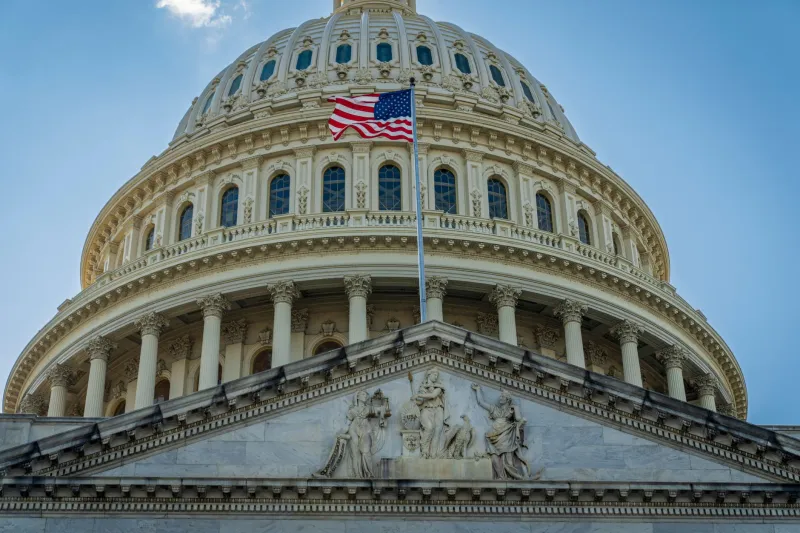
Democracy on the Back Foot: The Statehouse Surge to Redraw the Rules of Voting Before the 2026 Midterms
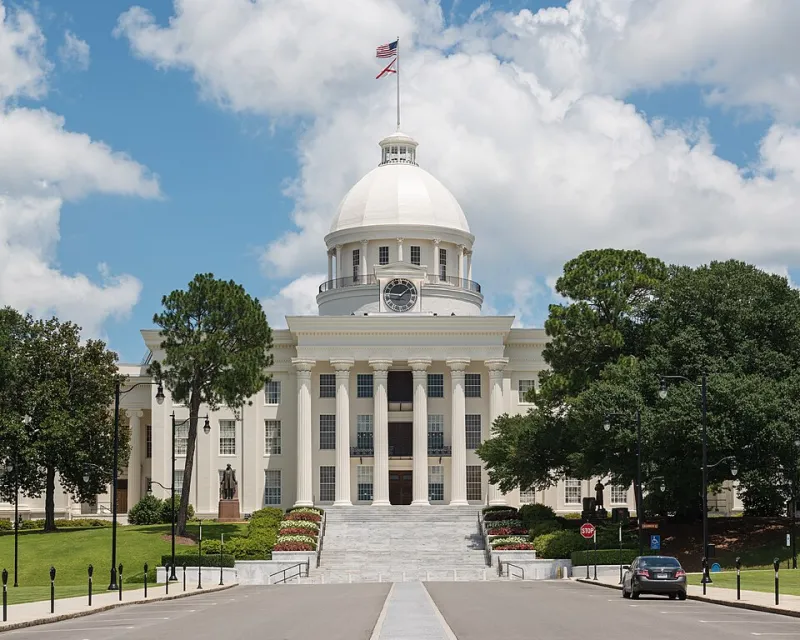
Photo: DXR, CC BY-SA 4.0, via Wikimedia Commons
The ballots from 2024 have long been counted, but the rules for counting the next ones are being rewritten right now — in committee rooms most voters will never see.
Since the last election cycle, Republican-controlled legislatures in a number of states have advanced bills affecting election administration: more aggressive voter list maintenance, new authority for state officials over county election boards, and procedural changes to absentee and early voting. Election-law trackers such as the Brennan Center for Justice and Voting Rights Lab have documented hundreds of election-related bills moving through statehouses in recent sessions, spanning both expansion and restriction. (Editor's note: as this publication does not have live reporting resources for every statehouse, readers should treat the state-by-state specifics below as a framework for following verified developments at the Brennan Center's Voting Rights Tracker and state legislature records.)
Administration Is Policy
The progressive framing must be blunt: there is no neutral 'housekeeping' when it comes to the machinery of democracy. Every purge protocol, every deadline, every restructuring of a canvassing board is a decision about whose vote is easiest to cast and whose is easiest to lose. When Georgia's 2018 gubernatorial race was administered by a Secretary of State running in that same race, we learned that election administration is not clerical — it is political power in its purest form.
The pattern to watch is the migration of authority upward. When county election boards lose independence and state officials gain suspension or override powers, the distance between a voter and the person who can nullify their ballot shrinks. That is a structural vulnerability, regardless of which party holds it today.
The Legal Battleground
Courts remain the pressure valve. Challenges under the National Voter Registration Act and the Help America Vote Act have repeatedly forced states to narrow roll-purge practices — most famously in litigation over Florida's 2012 purge effort, which was substantially halted for violating federal timing rules. But litigation is slow, and elections are not. A purge that is ruled unlawful in 2027 still succeeded in 2026.
Defenders of these laws argue, with some sincerity, that list maintenance protects public confidence in elections. The strongest version of that argument deserves engagement: voter rolls do contain duplicates and deceased registrants, and states have obligations under HAVA to maintain them. But the remedy cannot be a system in which eligible voters — disproportionately young, low-income, and mobile Americans — are removed by default and forced to re-register. The burden of accuracy should fall on the state, not the citizen.
Who Pays the Price
The people most exposed to restrictive administration are those whose citizenship of the system is already fragile: renters who move frequently, shift workers who cannot take time off on a single election day, voters with limited English proficiency, and students. Research from the Center for Inclusive Democracy and academic studies of roll maintenance consistently shows that improper purges fall hardest on precisely these groups. When a naturalized citizen is removed because of a database mismatch, the harm is not abstract — it is disenfranchisement with a bureaucratic alibi.
The 2026 Stakes
Midterms are decided by margins of a few thousand votes in a handful of states. Any administrative rule that shifts even a fraction of a percent of turnout in those places is not a technicality; it is the election. The progressive counterattack must be organized around three demands: automatic and same-day registration, a federal floor on roll-purge protections under the NVRA, and independent, professional election administration insulated from partisan state control.
The direction of American democracy is not set by any single election. It is set by the rules under which every election is run — and right now, those rules are moving.
The verdict is simple: a right that can be quietly administered away was never secure to begin with, and securing it is the work of this decade.