Broken Promises, Broken Bodies: The Unraveling of Police Consent Decrees and the Communities Left Behind

The Quiet Dissolution of the Last Enforceable Police Reform
In the spring of 2025, the Department of Justice under Attorney General Pam Bondi began signaling what many civil rights advocates had long feared: a systematic withdrawal from the consent decrees and court-enforced reform agreements that had, over decades, served as the federal government's most tangible mechanism for compelling accountability from troubled police departments. Cities including Louisville, Kentucky — where Breonna Taylor was killed in 2020 — Minneapolis, Minnesota, and Phoenix, Arizona, find themselves watching hard-won reform agreements either delayed, renegotiated on terms favorable to police departments, or quietly shelved. The legal scaffolding built on years of DOJ investigation, community organizing, and civil rights litigation is being dismantled plank by plank.
 Photo: Phoenix, Arizona, via c8.alamy.com
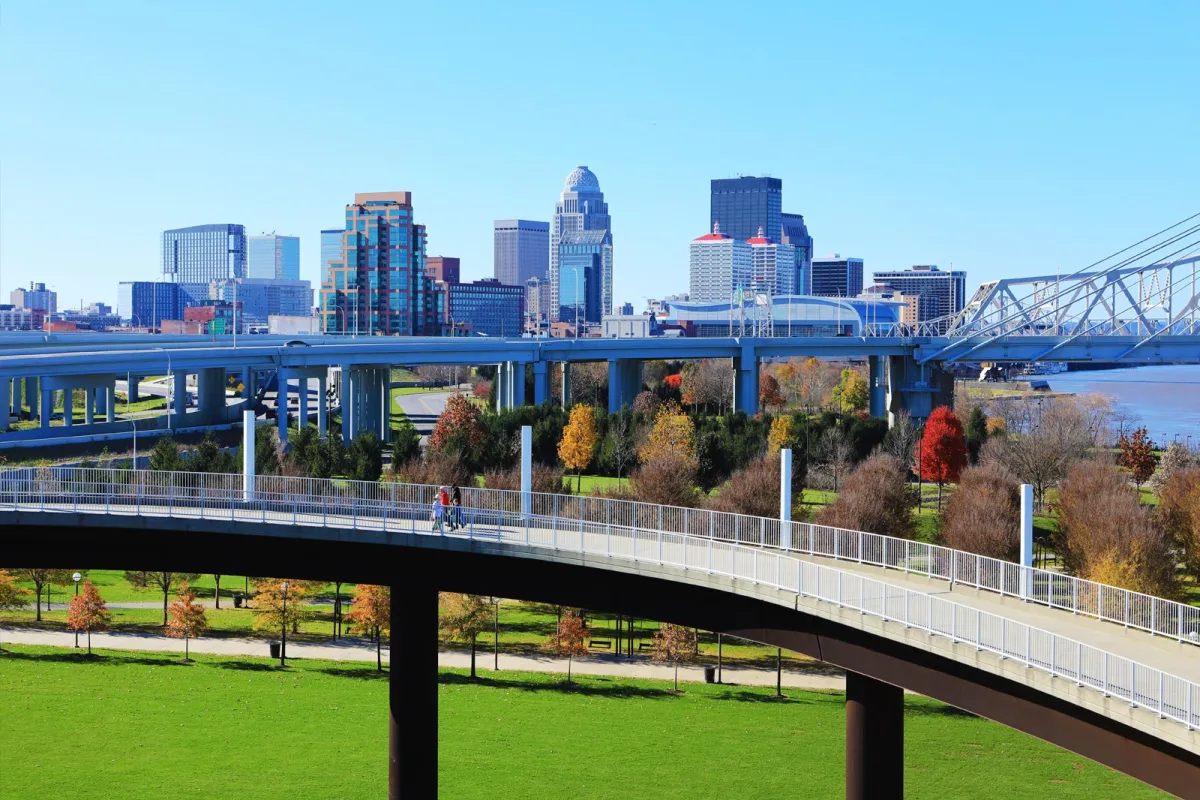 Photo: Louisville, Kentucky, via a.cdn-hotels.com
This is not a bureaucratic adjustment. It is a deliberate ideological choice — one that places institutional police power above the constitutional rights of the civilians those institutions are meant to serve.
What Consent Decrees Actually Do — and Why They Work
A consent decree is a court-enforced settlement agreement between the federal government and a local law enforcement agency found to have engaged in a pattern or practice of unconstitutional policing. These are not voluntary pledges or symbolic resolutions. They carry the force of law, are monitored by independent oversight bodies, and come with specific, measurable benchmarks: use-of-force policy reform, de-escalation training requirements, civilian complaint procedures, data transparency mandates, and more.
The evidence for their effectiveness is not anecdotal. A 2020 study published in the journal Justice Evaluation found that cities operating under DOJ consent decrees saw statistically significant reductions in both use-of-force incidents and civilian complaints. Research from the University of Texas at Dallas found that consent decrees were associated with meaningful reductions in police killings over multi-year implementation periods. In Los Angeles, where a consent decree ran from 2001 to 2013 following the Rampart scandal, independent monitors documented sustained improvements in officer accountability and a reduction in racially disparate stops.
In Louisville, the DOJ's own investigation — released in 2023 — found that the Louisville Metro Police Department had engaged in a pattern of unconstitutional stops, searches, and use of force disproportionately targeting Black residents. The consent decree negotiated in the aftermath was not a gift to activists. It was the minimum legal remedy for documented constitutional violations. Unwinding it does not make Louisville safer. It makes Louisville's Black residents more legally vulnerable.
The Ideological Architecture of Abandonment
The current administration frames its withdrawal from consent decrees as a matter of local control and law enforcement morale — the argument being that federal oversight demoralizes officers, hampers effective policing, and infringes on the authority of elected local governments. This is the strongest version of the opposing argument, and it deserves a serious response.
Local control is a genuine democratic value. But it is not an absolute one, and it has never been interpreted as such under the Constitution. The Fourteenth Amendment exists precisely because state and local governments cannot always be trusted to protect the civil rights of their own residents — particularly residents from marginalized communities with limited political power. When a police department engages in systematic, documented, unconstitutional conduct, federal oversight is not an intrusion on democracy. It is democracy functioning as designed.
As for officer morale: the argument that accountability measures harm police effectiveness has been made, in some form, in opposition to every major police reform of the past sixty years. It was made against civilian review boards, body cameras, and mandatory use-of-force reporting. The evidence that accountability destroys effective policing is weak. The evidence that unaccountable policing destroys community trust — and with it, the cooperation that effective policing actually requires — is substantial.
Who Loses When the Agreements Disappear
The answer is not abstract. In Minneapolis, where the city entered into a state-level consent decree following the murder of George Floyd, reform implementation has already been contentious and slow. Federal disengagement removes one layer of pressure and monitoring from a process that advocates argue was already moving too cautiously. For the Black residents of North Minneapolis, who experience police contact at dramatically higher rates than their white counterparts, the practical consequence of weakened oversight is a return to the conditions that produced the crisis in the first place.
In Phoenix, where the DOJ investigation documented officers using force against people experiencing mental health crises and homeless individuals at alarming rates, the retreat from federal engagement leaves some of the city's most vulnerable residents without a meaningful avenue for systemic redress. Individual lawsuits can compensate victims after the fact. Consent decrees prevent the harm from occurring in the first instance.
Across the country, Black Americans, Latino communities, people with disabilities, and those experiencing homelessness bear the disproportionate cost of unaccountable policing. These are not constituencies with significant political leverage in the current federal environment. That is precisely why the federal government's role matters.
What This Signals for the Road Ahead
The dismantling of consent decrees does not happen in a vacuum. It is part of a broader restructuring of the DOJ's Civil Rights Division — a unit that has, under successive administrations of both parties, served as a counterweight to local power when local power failed its residents. The current administration has made clear, through personnel decisions, budget proposals, and public statements, that this counterweight is being removed.
For civil rights advocates, the path forward runs through state attorneys general, municipal governments willing to maintain reform commitments without federal compulsion, and — critically — the federal courts, where existing consent decrees may be defended even as the DOJ withdraws its own support. Several advocacy organizations have already signaled intent to intervene as parties in consent decree proceedings to resist unilateral dissolution.
But litigation is slow, expensive, and uncertain. The communities that fought for these agreements — that organized, mourned, testified, and demanded accountability — deserve better than a rearguard legal action to preserve what they already won.
When the government stops enforcing the law against those who enforce the law, it is not neutrality. It is a choice — and the people who live with that choice deserve to know it was made deliberately, on their behalf, without their consent.
The consent decree is not a bureaucratic inconvenience — it is often the only piece of paper standing between a community and the next Breonna Taylor, and dismantling it is not a reform; it is a retreat from the Constitution itself.