Laboratories of Ignorance: How the Systematic Defunding of Federal Science Is Handing America's Public Health to the Private Sector
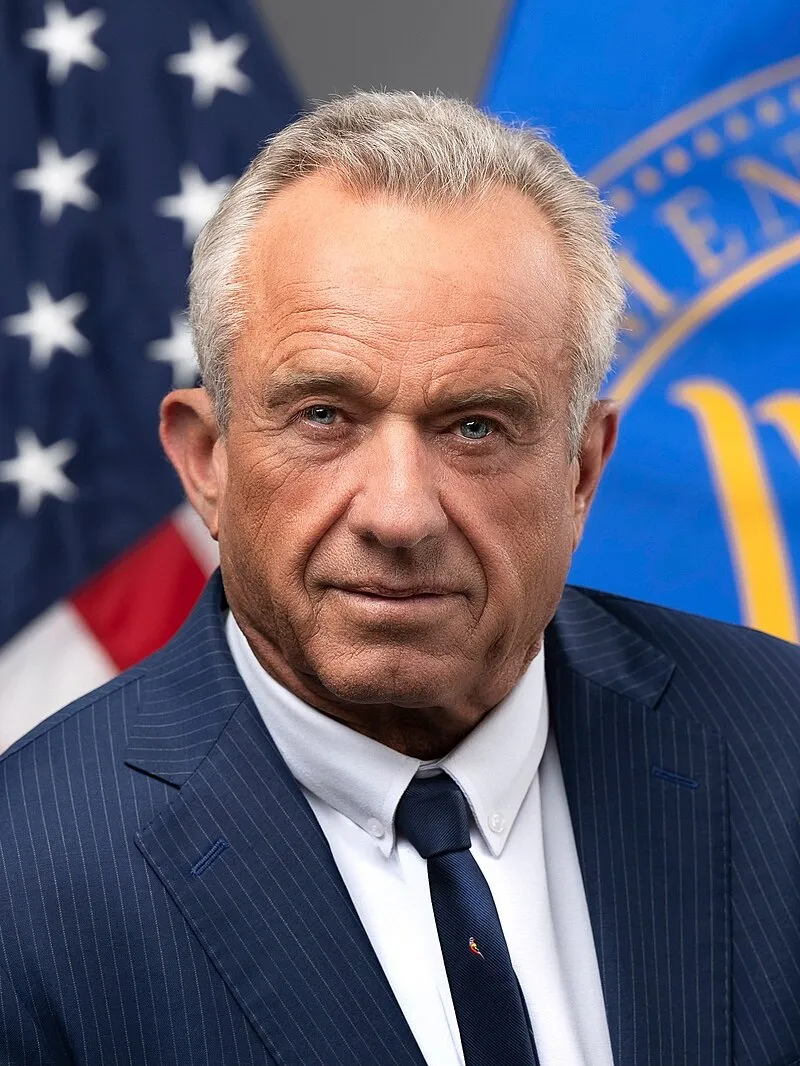
Photo of Robert F. Kennedy Jr., via Wikimedia Commons
The Layoffs Nobody Is Supposed to Notice
In early 2025, the Department of Health and Human Services announced a reduction in force that would eliminate approximately 10,000 positions across its component agencies, including the Centers for Disease Control and Prevention and the National Institutes of Health. The cuts were framed in the language of efficiency — redundant bureaucracy, bloated administrative overhead, a government that had grown beyond its appropriate scope. But the positions being eliminated were not paper-pushers. They were epidemiologists tracking disease outbreaks, biostatisticians analyzing vaccine safety data, public health researchers studying the chronic disease burden in underserved communities, and laboratory scientists maintaining the surveillance systems that serve as America's early warning network for emerging infectious threats.
 Photo: Department of Health and Human Services, via www.masterspublichealth.net
 Photo: Centers for Disease Control and Prevention, via www.cdc.gov
Simultaneously, the NIH — the world's largest public funder of biomedical research — saw hundreds of active research grants cancelled or placed under indefinite review. The USDA's Agricultural Research Service, which conducts foundational food safety science, faced budget reductions that forced the closure of research programs. The EPA's scientific advisory panels were restructured to reduce the influence of independent academic researchers and increase industry representation. Taken together, these actions constitute something more significant than a budget trim. They represent a fundamental reorientation of who generates the knowledge that governs public health in the United States.
What Federal Science Actually Does
To appreciate the stakes, it is necessary to understand what federal scientific agencies actually produce — and what the private sector cannot or will not produce in their absence.
The CDC's disease surveillance network is the infrastructure through which the United States detects and responds to outbreaks of influenza, foodborne illness, sexually transmitted infections, and emerging pathogens. It is not glamorous work. It does not generate quarterly returns. It is, by design, a public good — something that benefits everyone but that no private actor has sufficient incentive to fund at the scale required. When surveillance capacity is reduced, outbreaks go undetected longer, spread further, and cost more to contain. The COVID-19 pandemic demonstrated, at catastrophic scale, what happens when public health infrastructure is underfunded and undervalued.
The NIH's grant funding model is the backbone of basic biomedical research in the United States. The overwhelming majority of the foundational science that eventually produces pharmaceutical treatments, diagnostic tools, and surgical techniques originates in NIH-funded academic laboratories — not in the R&D divisions of pharmaceutical companies, which overwhelmingly focus on late-stage development of compounds identified through publicly funded basic research. When NIH grants are cancelled, the pipeline of scientific knowledge that private industry depends upon begins to thin. The consequences are not immediate. They are delayed by years or decades — which is precisely why this kind of destruction is so politically easy to execute and so difficult to reverse.
The USDA's food safety research programs underpin the inspection and regulatory systems that prevent contaminated meat, produce, and processed foods from reaching grocery store shelves. The FDA's drug safety review processes, already strained by staffing shortages, depend on scientific capacity that is being actively eroded. These are not abstract concerns. E. coli outbreaks, Salmonella contamination events, and delayed identification of dangerous drug interactions are the predictable downstream consequences of reduced scientific capacity in these agencies.
The Privatization of Knowledge
The most important — and least discussed — consequence of federal science defunding is not what the government will stop knowing. It is who will fill the knowledge gap.
Private industry does not conduct disinterested scientific research. It conducts research designed to advance its commercial interests. Pharmaceutical companies study the drugs they want to sell. Agricultural conglomerates study the practices that maximize their yields. Chemical manufacturers study the safety profiles of their products — and, historically, have shaped, suppressed, or selectively published those findings to protect market position. This is not a conspiracy theory. It is a documented pattern, from tobacco to leaded gasoline to PFAS chemicals to opioids, that has been established through litigation, congressional investigation, and independent scientific review.
When the federal government maintains robust independent scientific capacity, it provides a check on this dynamic. When that capacity is gutted, industry science — funded, designed, and interpreted by entities with direct financial stakes in the outcomes — moves into the vacuum. The result is not better science. It is captured science: knowledge production shaped by profit rather than public interest.
Proponents of the cuts argue that federal science has itself become ideologically captured — that agencies like the CDC have pursued political agendas under the guise of public health, and that reducing their footprint restores proper limits on government authority. This critique, in its strongest form, raises legitimate questions about how scientific agencies communicate uncertainty and navigate politically contentious topics. Those questions deserve serious engagement.
But the answer to concerns about institutional bias in scientific communication is not to eliminate the institutions. It is to reform their governance, strengthen their independence from political pressure, and invest in the kind of transparent, replicable, peer-reviewed research that produces trustworthy knowledge over time. Defunding is not reform. It is abdication — and the beneficiaries of that abdication are not the American public. They are the industries that profit when no one is watching closely enough.
The Communities Left Unprotected
The human consequences of weakened public health science are not evenly distributed. The communities most dependent on federal disease surveillance, food safety oversight, and environmental health research are those with the least access to private alternatives: rural communities without major academic medical centers, low-income urban neighborhoods with elevated exposure to environmental contaminants, communities of color that already bear a disproportionate burden of chronic and infectious disease.
When the CDC's environmental health tracking programs are cut, it is not wealthy suburban families who lose visibility into the cumulative pollution burden their children carry. It is communities living near industrial facilities, petrochemical plants, and agricultural operations where exposure monitoring is the only mechanism for establishing the link between environmental conditions and health outcomes — a link that is legally necessary to compel remediation.
The Direction This Points
America built its federal scientific infrastructure over the course of a century, through New Deal-era public investment, post-World War II research expansion, and bipartisan consensus that a wealthy democracy had both the capacity and the obligation to generate knowledge in the public interest. That infrastructure is not being reformed. It is being systematically dismantled — not because it failed, but because it succeeded: because independent federal science has, at critical moments, told powerful industries things they did not want to hear.
The question of who generates knowledge — who funds it, designs it, interprets it, and decides what gets acted upon — is not a technical question. It is a question of power. And right now, the answer is being rewritten in ways that will shape American public health for a generation.
A country that defunds its ability to understand disease, contamination, and environmental harm is not cutting government. It is blinding itself — and handing the remaining eyesight to those with the most to gain from what goes unseen.