Fear as Policy: How Immigration Enforcement Near Schools Is Hollowing Out the Constitutional Right to an Education
The Right That Exists on Paper
In 1982, the Supreme Court ruled eight-to-one in Plyler v. Doe that the State of Texas could not deny a free public education to undocumented children. Writing for the majority, Justice William Brennan declared that education is not merely an economic good but a foundational requirement for participation in civic life — and that the state could not impose the consequences of a child's immigration status onto the child themselves. The ruling was unambiguous. The right was absolute.
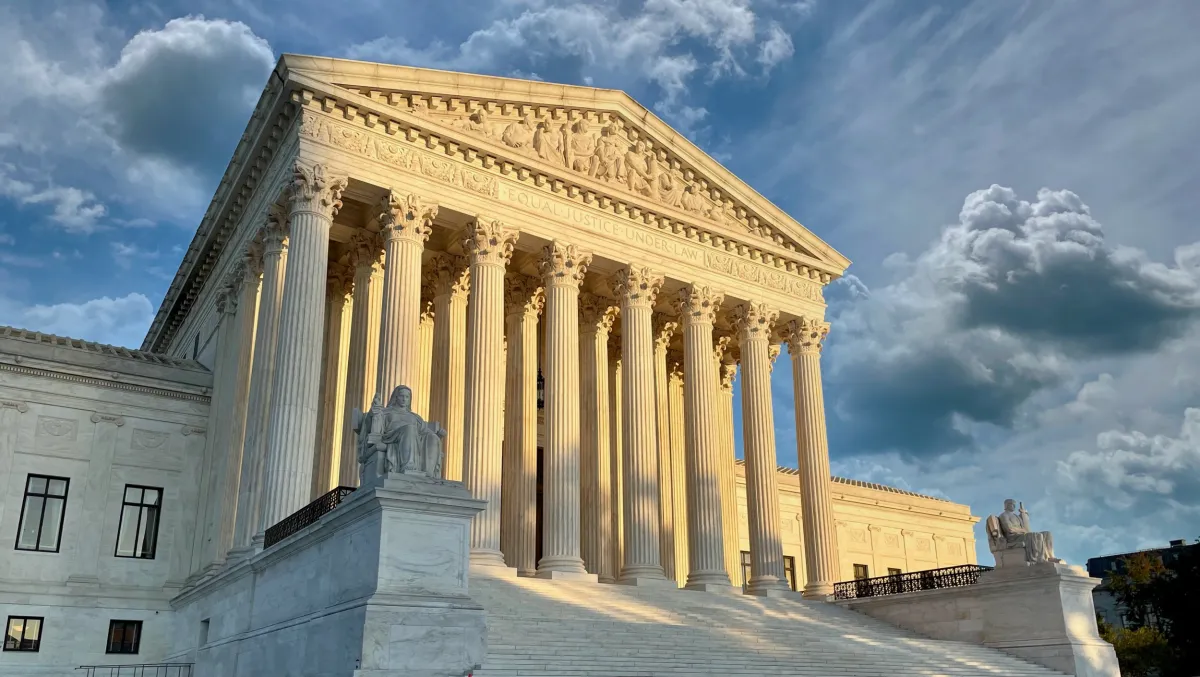 Photo: Supreme Court, via cdn.arstechnica.net
Forty-three years later, that right survives in the case reporters and constitutional law textbooks. In practice, it is being quietly strangled in the school districts where it matters most.
Across the country, in communities from Southern California to Northern Virginia to the Rio Grande Valley, school administrators, teachers, and enrollment officers are reporting a troubling pattern: immigrant families — including those with children who are American citizens by birth — are keeping their kids home. Not because they do not value education. Not because the schools are failing. Because the school run has become a risk calculation, and for mixed-status families living in high-enforcement areas, the calculus increasingly does not favor the commute.
The Enrollment Numbers Tell a Story
The data is incomplete by design — immigration enforcement activity is not systematically tracked in relation to school attendance — but the directional evidence is stark. Following high-profile ICE operations in communities in Tennessee, Texas, and Georgia in early 2025, local school districts reported attendance drops of between fifteen and thirty percent in the days immediately following enforcement actions, according to reporting by the Associated Press and local education officials.
In Los Angeles, where the school district serves one of the largest populations of children from immigrant families in the country, Superintendent Alberto Carvalho publicly reported in early 2025 that enrollment inquiries from immigrant families had declined noticeably and that the district had received reports of families withdrawing children or asking about homeschooling alternatives out of fear of exposure during school transportation. Similar reports emerged from Chicago, Houston, and Northern Virginia's Fairfax County.
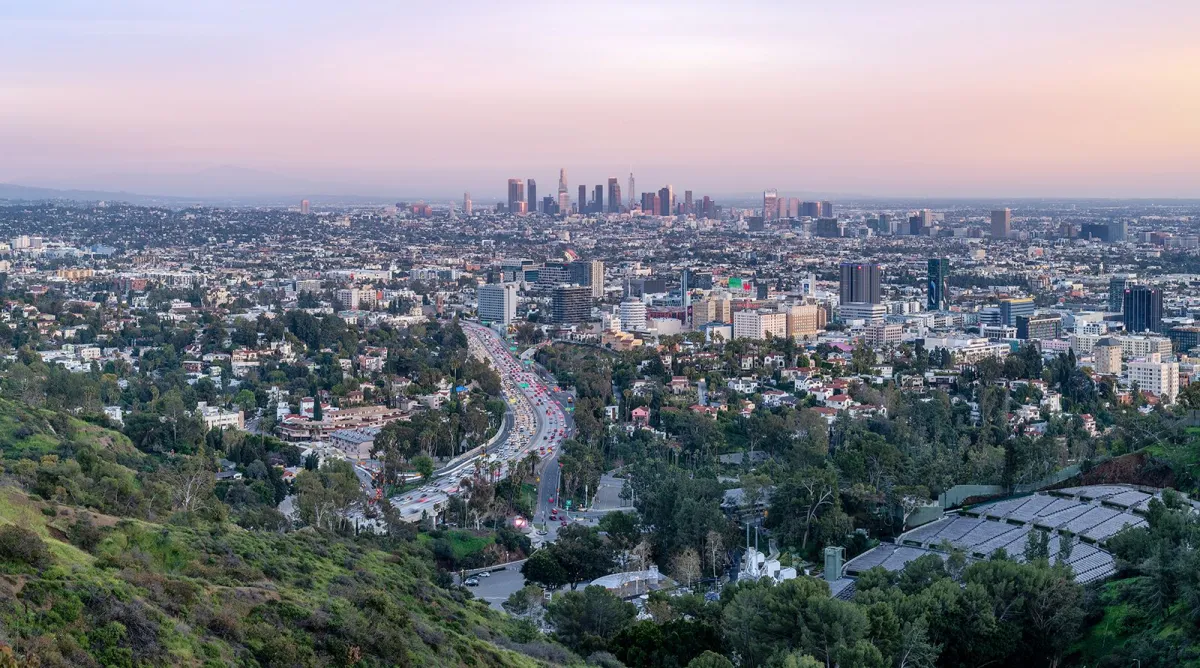 Photo: Los Angeles, via cdn.britannica.com
This is not a new phenomenon, but the scale and intensity have escalated sharply under the current administration's posture toward interior enforcement. Under the first Trump term, the Department of Homeland Security issued guidance designating schools as "sensitive locations" where immigration enforcement operations would generally be avoided. That guidance was rescinded in January 2025. There is now no formal federal policy protecting school zones from ICE activity.
The Legal Guarantee and Its Practical Limits
Plyler v. Doe remains binding precedent. No court has overturned it. Several state-level legislative efforts to challenge it — most recently in Texas, where state legislators have periodically floated bills that would require schools to verify immigration status — have not succeeded in producing enforceable law, in part because the constitutional barrier remains formidable.
But constitutional rights are only meaningful if they can be exercised. A child who is legally entitled to attend school but does not attend school because her family fears that the walk to the bus stop will result in her father being detained has not had her right protected. She has had it rendered theoretical.
This is the mechanism of enforcement-as-deterrence, and it is not accidental. When immigration enforcement creates fear dense enough to keep children out of classrooms, it achieves a policy outcome — reduced enrollment of children from immigrant families — without ever having to confront the constitutional prohibition directly. The right survives. Its exercise does not.
The Strongest Counterargument
Those who defend aggressive interior enforcement argue that the United States is a nation of laws, that immigration rules must be enforced to retain meaning, and that schools cannot be categorically exempt from the reach of federal authority. This is not an argument to be dismissed.
But there is a meaningful distinction between enforcing immigration law and deploying that enforcement in ways that predictably and demonstrably suppress the exercise of constitutional rights by children. The question is not whether immigration law should be enforced. The question is whether the federal government has an obligation to enforce it in ways that do not functionally nullify the constitutional protections of American citizen children and lawfully present minors who share households with undocumented family members.
The answer, under any serious reading of constitutional jurisprudence, is yes. Rights that can be nullified by adjacent enforcement activity are not rights. They are conditional privileges — and that is not what Plyler established.
Mixed-Status Families at the Center
The population most directly affected by school-zone enforcement chilling effects is not, in the main, undocumented children. It is mixed-status families — households in which at least one member is undocumented and at least one is a U.S. citizen or lawful permanent resident. The Pew Research Center has estimated that approximately 4.4 million U.S.-born citizen children live with at least one undocumented parent.
For these children, the threat is not deportation. It is family separation. The fear is not that they will be removed from the country — they are American citizens. The fear is that the act of going to school will expose a parent to enforcement action, resulting in detention, deportation, and the collapse of the family unit that the child depends on for survival.
A seven-year-old American citizen who stops attending school because she is afraid her mother will be arrested on the way to drop her off is not a hypothetical. She is a policy outcome. She is the direct, foreseeable, and in some quarters intended consequence of a deliberate choice to remove protections from school zones.
The Broader Implications
The erosion of Plyler protections in practice — without the political and legal cost of overturning the ruling — represents a model of constitutional circumvention that should concern anyone who believes rights require more than nominal existence. If enforcement activity can suppress the exercise of a constitutional guarantee without technically violating it, then the guarantee becomes a ceiling rather than a floor: it prevents the most egregious formal violations while permitting the quiet, deniable destruction of the right in practice.
For the progressive project — the long, slow work of building a country in which constitutional promises mean something for everyone — this is not an abstraction. It is a test. The children being kept out of classrooms by fear are not statistics. They are the future that Plyler was meant to protect: the recognition that children do not choose their circumstances and should not be punished for them.
Restoring that protection requires more than citing the case. It requires federal policy that takes the chilling effect seriously, restores sensitive location protections, and holds enforcement agencies accountable for the predictable constitutional consequences of their operational choices.
A constitutional right that can be extinguished by fear is not a right at all — and a government that knowingly cultivates that fear in the vicinity of schoolchildren has forfeited its claim to the principle it is supposed to uphold.