Signed, Sealed, Abandoned: How the Trump Administration Is Tearing Up the Last Contracts That Held Police Accountable

The Agreements That Actually Had Teeth
In January 2025, the Department of Justice moved to terminate or suspend consent decree negotiations in Louisville, Kentucky — the city where Breonna Taylor was killed in her own home by officers executing a no-knock warrant. The Louisville Metropolitan Police Department had been under a scathing DOJ investigation that found a pattern of unconstitutional stops, excessive force, and retaliation against officers who reported misconduct. A consent decree was the agreed path forward. Then the administration changed, and so did the path.
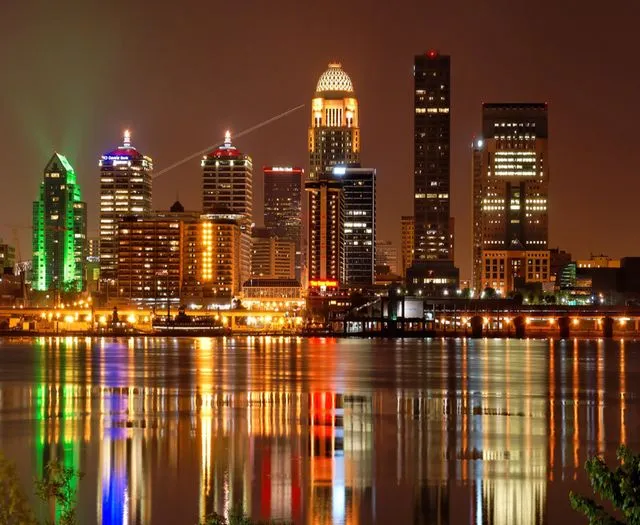 Photo: Louisville, Kentucky, via www.attractionsofamerica.com
This was not an isolated case. The same retreat has played out, in varying degrees, in Minneapolis — where George Floyd was murdered in May 2020 — and in Memphis, where Tyre Nichols was beaten to death by five officers in January 2023. In each city, federal investigators documented systemic failures. In each city, consent decrees were either in progress, under negotiation, or newly signed. And in each city, the current administration has signaled its intent to walk away.
The mechanism being abandoned here is not symbolic. Consent decrees are court-enforceable agreements — negotiated between the DOJ and a local government — that mandate specific, measurable reforms: new use-of-force policies, independent monitors, officer training requirements, data transparency protocols, and community oversight structures. Critically, because they are entered into federal court, a city cannot simply ignore them without legal consequence. They represent the rare instance in American governance where accountability has actual teeth.
What These Decrees Actually Required
To understand what is being lost, it helps to understand what these agreements demanded in concrete terms. The Louisville investigation, published in March 2023, found that LMPD officers routinely used neck restraints, deployed force against people in mental health crises without de-escalation attempts, and conducted retaliatory arrests against people who filmed officers on public streets. The proposed consent decree would have required LMPD to adopt a duty-to-intervene policy, submit to an independent monitor, and report use-of-force data publicly on a quarterly basis.
In Minneapolis, the city entered a consent decree with the state of Minnesota in 2023 after the DOJ found a pattern of racially discriminatory policing and unconstitutional use of force. Federal investigators documented that Black residents were subjected to force at a rate seven times higher than white residents. The decree required mandatory crisis intervention training, restrictions on chokeholds, and civilian oversight with subpoena power.
These were not vague aspirational documents. They were operational blueprints with deadlines, benchmarks, and the threat of judicial enforcement behind them.
The Data on What Happens Without Oversight
Opponents of consent decrees — and there are credible voices among them — argue that federal oversight can demoralize police departments, drive officer attrition, and create what some criminologists call a "de-policing" effect, where officers become reluctant to engage proactively out of fear of discipline. This is the strongest version of the counter-argument, and it deserves engagement.
But the evidence does not support the conclusion that consent decrees cause more harm than they prevent. A 2020 study published in the Journal of Criminal Law and Criminology found that cities under DOJ consent decrees saw statistically significant reductions in police killings — approximately 27 percent over the course of the agreements. Research by political scientist Rob Worden and colleagues found that departments under court oversight demonstrated measurable improvements in use-of-force compliance within three to five years of implementation.
Conversely, the data on departments that have never been subject to federal oversight is grim. According to Mapping Police Violence, the United States averages more than 1,100 police killings annually — a rate that has remained essentially unchanged since 2013, despite a decade of protests, pledges, and task force reports. Voluntary reform, it turns out, is largely a fiction.
The People Left Behind
The human cost of this retreat is not abstract. In Louisville, the Taylor family and advocacy organizations spent years pushing for the consent decree as a condition of what they called meaningful accountability. Community groups in Memphis — many led by family members of Tyre Nichols — organized around the consent decree process as the tangible, enforceable product of their grief and organizing. When the federal government walks away from these agreements, it is not walking away from paperwork. It is walking away from the people who were promised that this time would be different.
Black Americans bear the disproportionate weight of this abandonment. According to data from the Washington Post's police shooting database, Black Americans are killed by police at more than twice the rate of white Americans, even when controlling for encounter rates. In cities like Louisville and Minneapolis, where the racial disparities in use-of-force were explicitly documented by federal investigators, the termination of consent decree processes removes the single most effective federal lever for addressing that disparity.
What This Signals for the Political Landscape
The administration's retreat from consent decrees is not incidental. It is ideological. Attorney General Pam Bondi has made clear that the DOJ views local police autonomy as a value worth protecting, even when that autonomy has produced documented constitutional violations. This framing — which positions federal oversight as government overreach — is politically useful but historically dishonest. Federal intervention in local law enforcement has, historically, been most necessary precisely where local political structures have failed to self-correct.
For civil rights organizations, the lesson is stark: the window for federal enforcement is contingent on who holds the executive branch. That instability is itself an argument for legislative solutions — statutory requirements for consent decrees following pattern-or-practice findings, independent funding for DOJ Civil Rights Division investigations, and mandatory community oversight structures that do not depend on the goodwill of any single administration.
Progress in civil rights has never been a gift from the powerful to the powerless — it has been extracted through sustained political pressure, legal action, and the refusal to accept managed decline as a substitute for justice.
Abandoning consent decrees is not a policy disagreement about tactics; it is a choice to let documented constitutional violations continue unchecked — and the communities absorbing the consequences of that choice deserve to name it plainly.